Hard Drive Shredding for Business Pickups in Kansas City, MO
Retired hard drives, SSDs, and tape from Missouri-side Kansas City offices need a destroy decision made by media type and data sensitivity, not by habit. Precision E-Cycle confirms the media and records in a project review, offers free pickup for qualifying business volumes, and processes every load in Lincoln, Nebraska. Ask about your free Certificate of Destruction.
When Is Hard Drive Shredding the Right Call in Kansas City?
Precision E-Cycle destroys, sanitizes, or clears drives for Kansas City, MO businesses, matching the method to the media and the data it held. Hard drive shredding physically destroys a drive so it can never be read or reused. NIST SP 800-88 Rev. 2 says shred and pulverize techniques should be avoided for anything but the lowest security categories of data, so shredding fits failed or end-of-life drives holding lower-sensitivity data, while other media gets a method matched to it.
Precision E-Cycle collects drives from Missouri-side Kansas City sites and processes every load in Lincoln, Nebraska. Across the metro, large federal offices, the healthcare and financial-services employers OneKC lists, and campuses such as UMKC retire drives that held very different data. Our Kansas City, MO sales office is at 2300 Main St; processing stays in Lincoln.
What Kansas City Security and Records Teams Can Plan
A method matched to the media
Magnetic drives, SSDs, and tape respond differently to destruction techniques, so each class gets its own method instead of one shredder setting for everything.
Records that match your inventory
Bring the identifiers and fields your controls require. The review confirms whether the certificate lists each drive by serial number or covers the batch, before any drive leaves your site.
Certified management systems
Precision holds ISO/IEC 27001:2022 for information security, plus ISO 14001:2026, ISO 9001:2015, and ISO 45001:2018. Review their scopes alongside your own controls.
Request Service
Ready to Recycle?
Pickup is free for qualifying business volumes. Schedule yours or contact us with questions.
Related Services
How a Kansas City Hard Drive Shredding Project Runs
Inventory the media
List drives by type (HDD, SSD, NVMe, tape) with serials or asset tags where you have them, and mark the data sensitivity of each group. We scope the categories with you and schedule pickup at your site.
Decide destroy or sanitize
Drives headed for reuse need clear or purge; failed and end-of-life drives can be destroyed. Each media class gets a method suited to its design and sensitivity, written down with the certificate fields before pickup is booked.
Counted pickup on the Missouri side
Drives are counted against your list at your Missouri-side site and collected with free pickup. Keep loose drives listed apart from the equipment they came out of, so each one keeps its own line. Every load goes to Lincoln, Nebraska.
Destruction and records
In Lincoln, each media class is destroyed or sanitized by the agreed method, remaining material is routed to R2-certified downstream processors, and the certificate of destruction closes out the batch for your asset file.
Which Drives Should Be Shredded, and Which Should Not?
A single Kansas City batch often mixes media that need different outcomes: failed hard drives, working SSDs pulled during a refresh, and old backup tape. Sort by media type, data sensitivity, and whether reuse is planned before deciding what goes to the shredder.
The decision is more than shred or keep
NIST SP 800-88 Rev. 2 ties method selection to media type and information sensitivity, and a label such as "hard drive" does not identify the storage design inside a device. Record manufacturer, model, and media type so each drive can be matched to a method.
Set the target at the drive level, not the load. A server with several drives may hold some that need destruction and some that can follow another outcome, and your policy owner can then reconcile each decision with the asset record.
Magnetic and flash media need different questions
- Separate magnetic hard disk drives from solid-state and NVMe media in your inventory
- Record loose drives separately from the computer or enclosure they came from
- Flag tape and other storage formats rather than grouping them under hard drives
- Identify embedded storage where your asset list or system design makes it visible
- Note the information sensitivity and the disposition outcome your policy requires
- Mark leased or vendor-owned media so return terms are checked before destruction
NIST SP 800-88 Rev. 2 states: "Pulverize and shred techniques for ISM should be avoided for anything but the lowest security categories of data." That caution is why each media class gets its own method instead of a blanket promise that shredding suits every device.
Degaussing is not a universal alternative
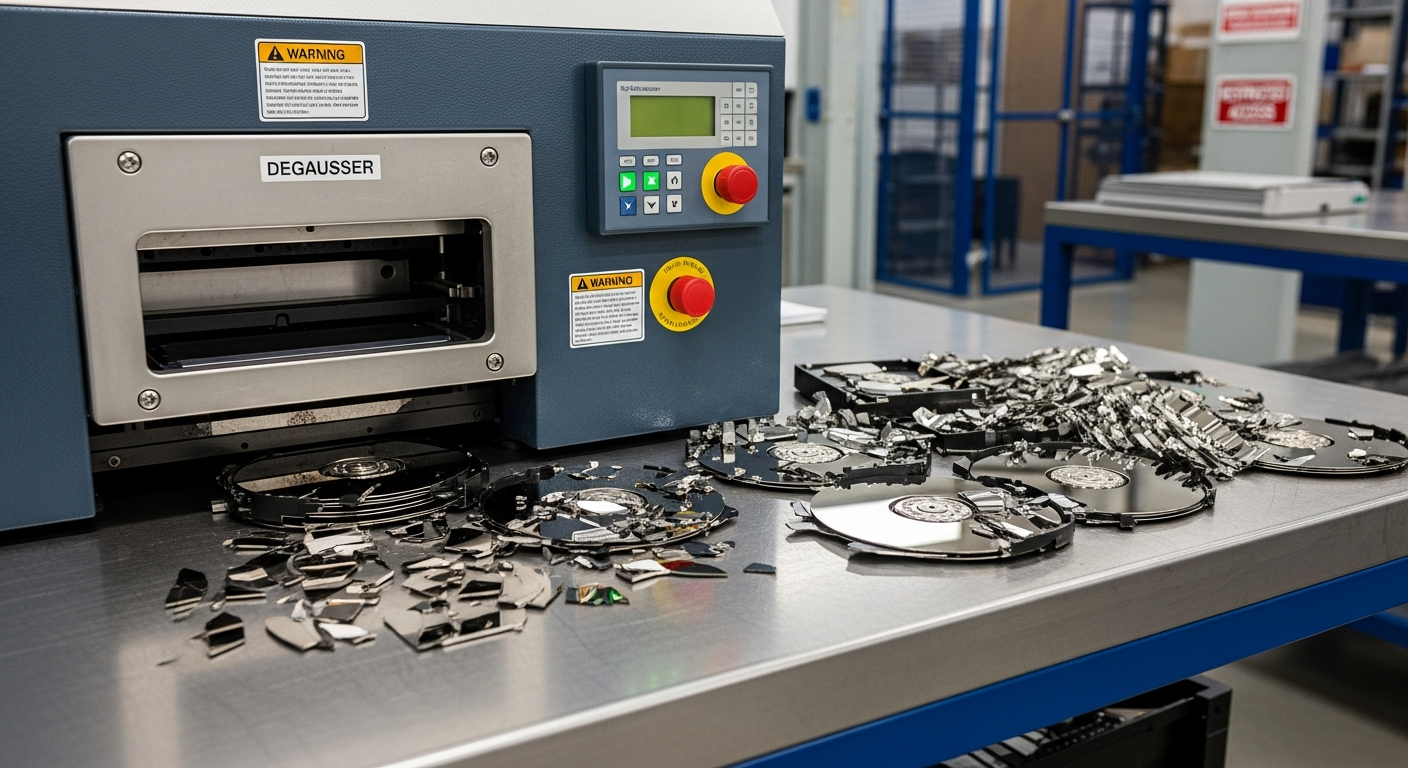
NIST SP 800-88 Rev. 2 states that degaussing “is not considered an approved destroy sanitization technique.” The guidance also warns that degaussing is unsuitable for non-magnetic media such as SSDs. Do not treat it as a substitute for identifying the storage type.
Physical destruction is irreversible, so settle retention, lease return, and reuse decisions first. Keep uncertain or return-bound media outside a destruction batch until its owner confirms disposition. This helps prevent destruction before another control releases the device.
Ask what the record can actually prove
NIST SP 800-88 Rev. 2 section 4.6 lists reference fields for a sanitization certificate, and Appendix C adds media destination. Together they make a practical benchmark for any destruction record.
Settle the record before pickup
Ask whether Precision's certificate identifies each drive or the batch as a whole, which method and verification details it records, and how it is delivered. Compare a sample with your retention and audit requirements during the project review.
If your controls work at the drive level and a record covers only the batch, decide whether that meets policy before scheduling.
Data destruction for broader media projects
Certificate of destruction details
Key takeaway
Decide destroy or sanitize for each media class first, then agree the certificate fields; shredding is the right answer only for the drives that call for it.
Which Material and Information Rules Apply to Drive Destruction?
Drive destruction settles the data on the media. It does not settle every rule that applies to the hardware, so treat information duties and material duties as two separate questions for your legal, security, and environmental teams.
Missouri rules address certain electronics as material
Missouri DNR applies RSMo 260.350 to 260.430 to certain unwanted electronics. The state says specified businesses and other organizations cannot legally discard listed electronics in Missouri landfills and must properly manage those items. The restriction is not a general drive-destruction rule and does not apply to every device.
The material rule is item-specific
Check whether the actual equipment falls within Missouri's listed categories. Do not treat a drive's data outcome as proof that its enclosure, battery, or other electronics can follow the same disposition route.
- Reuse may be considered for working equipment where the data outcome and eligibility permit it
- Recycling applies to eligible electronics through the route confirmed for that material
- Hazardous-waste management depends on an item's classification
- Universal-waste standards under 40 CFR Part 273 apply conditionally by material and handler category
After destruction, remaining material from Kansas City batches is routed from Lincoln to R2-certified downstream processors. List any enclosures, batteries, and tape cases that travel with the drives, and we plan each category.
Missouri breach notice is not a destruction mandate
RSMo 407.1500 requires owners or licensees of covered personal information about Missouri residents to notify affected consumers after a breach of security. It does not create a general destruction duty for businesses disposing of that information. Treat it as breach-notification context, not a hard-drive shredding rule.
Federal rules depend on the information and organization
HIPAA and the FTC rules depend on the organization and the data involved, so your legal or compliance team decides which apply. A destruction certificate can support those records, but it cannot decide whether a law covers your organization.
Keep data and material controls distinct
A sanitization decision addresses information on media. A material decision addresses the hardware that remains. Record both decisions separately so a data outcome is not mistaken for an equipment disposition route.
Degaussing information for magnetic media
Key takeaway
Shredding settles the data; Missouri's landfill rule still governs the hardware, and federal rules decide which records your organization keeps.
How Can a Kansas City Team Prepare a Media Inventory Before Pickup?
Start with the records your organization already relies on. A useful project list distinguishes loose drives from installed media, identifies the storage design when known, and states the intended data outcome. Project review then confirms which categories and site details fit the agreed scope.
- List manufacturer, model, serial number, and your asset tag where available
- Separate HDD, SSD, NVMe, tape, and other media categories in your own inventory
- Record which items are loose and which remain inside equipment
- Flag leased, financed, or vendor-owned assets before disposition
- Identify the information sensitivity and required outcome for each media group
- Name the staff member responsible for release and internal reconciliation
- Note which site is on the Missouri side of the Kansas City metro
When several departments retire media together, appoint an internal owner to reconcile each department's list and required outcome. That step can expose missing identifiers, unapproved equipment, or return obligations before the project scope is set. Keep the source inventory under your organization's own control.
Confirm the handoff before setting a date
Schedule a Kansas City pickup and we plan each site and load with you. Kansas City loads are processed at our secure Lincoln, Nebraska facility, so agree how your list is used at intake, how count differences are resolved, and any project-specific charges before the date is set.
Keep your own asset controls intact
Your inventory stays the control copy. Ask whether intake counts can be compared with it and which identifiers appear on the returned records, then file both together.
Questions to settle during project review
- Which listed media types are accepted for this project?
- Does the intended outcome fit each media design and sensitivity?
- Which pickup sites and loads belong in each scheduled pickup?
- What movement details are available at handoff and intake?
- Which destruction or disposition records can be supplied?
- How are exceptions or inventory differences handled?
Match the service scope to the equipment
If policy says intact drives cannot leave your building, ask about on-site destruction for your Kansas City site when you request a quote.
Ask about on-site destruction for your Kansas City site
Data destruction for mixed media
Searching for hard drive shredding near me on the Missouri side of Kansas City? Send the inventory and request a free quote; we confirm the media plan, your pickup date, and the record you will receive.
Key takeaway
Prepare the inventory by media type first; eligibility, handoff details, and the certificate fields all follow from that list.
Kansas City Hard Drive Shredding Questions, Answered
Request Service
Ready to Get Started in Kansas City?
Get a free quote or send us a message about your project, and we scope pickup and documentation around your site.