01
Define the recovery goal
We review the equipment profile, approximate quantity, locations, timing, and whether the priority is value recovery, fast removal, donation, recycling, or a combination.
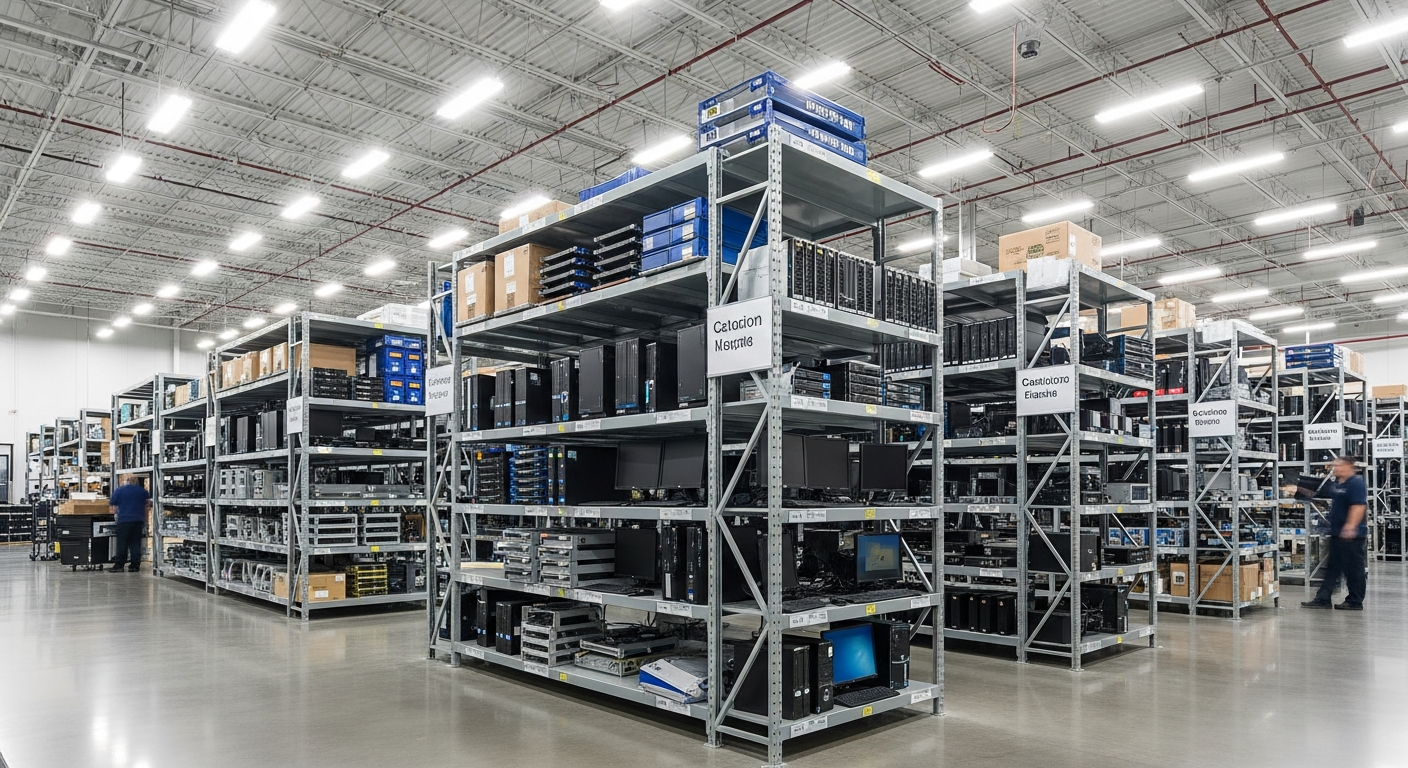
A transparent path for reusable technology that may offset disposal costs while keeping data security and responsible downstream handling in the same plan.
IT asset liquidation is the evaluation and remarketing of reusable equipment before it is recycled. It can help an organization recover value from a refresh, but it should never turn into an opaque resale promise. Precision E-Cycle separates data security, condition grading, marketability, and final disposition so your team can see why an asset was reused, recovered, or recycled.
Liquidation works best when the organization knows what it owns and what it expects to recover. Our process starts with a usable asset record, not a vague promise that every old laptop has resale value.
We review the equipment profile, approximate quantity, locations, timing, and whether the priority is value recovery, fast removal, donation, recycling, or a combination.
Assets are logged where possible and sorted by type, condition, completeness, age, and obvious reuse barriers such as damage, locks, missing parts, or unsupported configurations.
Data-bearing media is handled under NIST 800-88 aligned methods before equipment is released for a reuse or remarketing path. Devices that cannot be sanitized appropriately are not treated as resale-ready.
Reusable equipment can be graded for practical marketability. The evaluation considers condition and completeness rather than assigning an assumed value to every item in a mixed load.
You receive the agreed project documentation, including asset records, data destruction evidence for applicable devices, and a summary of the reuse, recovery, and recycling paths.
The best recovery candidates are equipment families that can be counted, tested, sanitized, and described accurately. A device does not need to be new, but it does need a realistic next use and a responsible way to get there.
Business laptops, desktops, workstations, and monitors from a planned refresh with identifiable models and accessories.
Switches, access points, firewalls, and related equipment with a clear model history and no unresolved account or firmware lock.
Equipment that can be inventoried and evaluated after storage media and configuration data are handled appropriately.
Docking stations, monitors, printers, phones, tablets, and peripherals where condition and completeness support a practical reuse path.
A transparent program needs a clear exit when an asset is not worth remarketing. These conditions do not automatically disqualify a load, but they can change the recommended path and expected recovery.
Broken screens, missing power supplies, damaged ports, swollen batteries, and incomplete assemblies reduce practical value.
Older processors, unsupported operating systems, and low-demand models may have more value as material than as working equipment.
Activation locks, management enrollment, encryption keys, and firmware passwords need to be resolved by the owner before remarketing.
Drives and embedded storage must be sanitized or destroyed according to the agreed policy before any reuse path.
A single load may contain reusable items, recyclable items, and items that need a special handling conversation.
Batteries, CRTs, lamps, and other items can have different handling or fee considerations than ordinary electronics.
A recovery program can offset some of the cost of collection, testing, storage, and processing when equipment has a practical second market. That does not mean every device creates a credit, and it does not mean the fastest or highest quote is the safest option. We keep the evaluation tied to the actual asset list and the condition we can verify.
The data security layer stays in place whether an asset is reused or recycled. A device is not resale-ready simply because it powers on. Storage media, embedded flash, network configuration data, and account controls all need to be addressed before the equipment changes hands. If the asset does not meet the agreed reuse conditions, it can move to material recovery instead.
For a finance or IT team, the value of a transparent evaluation is knowing what decision was made and why. A recent laptop with its charger, a complete monitor fleet, and a server with removable storage may have different paths even when they arrive together. Condition notes, ownership approval, lock status, and data handling should travel with that decision. This keeps a possible recovery credit from becoming the only measure of success. The organization also gets a cleaner explanation for equipment that was recycled because reuse was not practical or responsible.
Before requesting liquidation, gather ownership approval, remove accounts where policy allows, identify equipment that must be returned to a lessor, and flag devices with missing accessories or unresolved locks. Those details make the evaluation more transparent and reduce the chance that a promising item is delayed after collection. They also let the project owner compare recovery potential with the time and handling needed to prepare the asset.
Combine value recovery with data security, logistics, and documented closure.
ExploreRecycle endpoint fleets when reuse is not the right fit.
ExploreReview the media sanitization methods behind every safe disposition.
ExploreStart a business pickup conversation for your equipment load.
ExploreShare the equipment types, approximate counts, condition, and locations. We will help separate recovery candidates from recycling-only material before scheduling.
Free pickup for qualifying business volumes, with availability confirmed during scheduling. Call 402-540-6965 with project details.