Secure Data Destruction
Built for Compliance.
Improperly retired media is a preventable data breach risk. Our destruction methods, informed by NIST SP 800-88 Rev. 2, close that gap with serialized documentation for each asset processed.
Looking for professional data destruction near you? Precision E-Cycle coordinates IT asset disposition with R2-certified downstream vendors where applicable. Where included in the confirmed service scope, eligible data-bearing equipment may be sanitized or physically destroyed using methods informed by NIST 800-88. Get a free quote and ask about nationwide pickup, which is free for qualifying business volumes.
What is NIST 800-88 data destruction?
NIST SP 800-88 Rev. 2 describes three sanitization categories for electronic media: Clear (for example, overwrite), Purge (for example, cryptographic erase, or degaussing for magnetic media only), and Destroy (for example, shredding). Precision E-Cycle matches methods to the media type at our Lincoln, Nebraska processing facility. Data-bearing devices processed receive a serialized Certificate of Destruction documenting the method, date, and technician. This documentation supports HIPAA, SOX, FACTA, FISMA, and FERPA audit obligations.
Average data breach cost (2024)
Source: IBM Cost of Data Breach Report, 2024
Current NIST SP 800-88 revision
Source: NIST, published September 2025
Informed by NIST SP 800-88 Rev. 2
Sanitization techniques should match the media type and the sensitivity of the data, with verification records showing the sanitization occurred.
Three Methods. Matched to the Media.
Our methods are informed by NIST SP 800-88 Rev. 2, and degaussing is used only on magnetic media. The method applied depends on media type, sensitivity level, and whether the drive is intended for reuse or disposal.
Physical Shredding
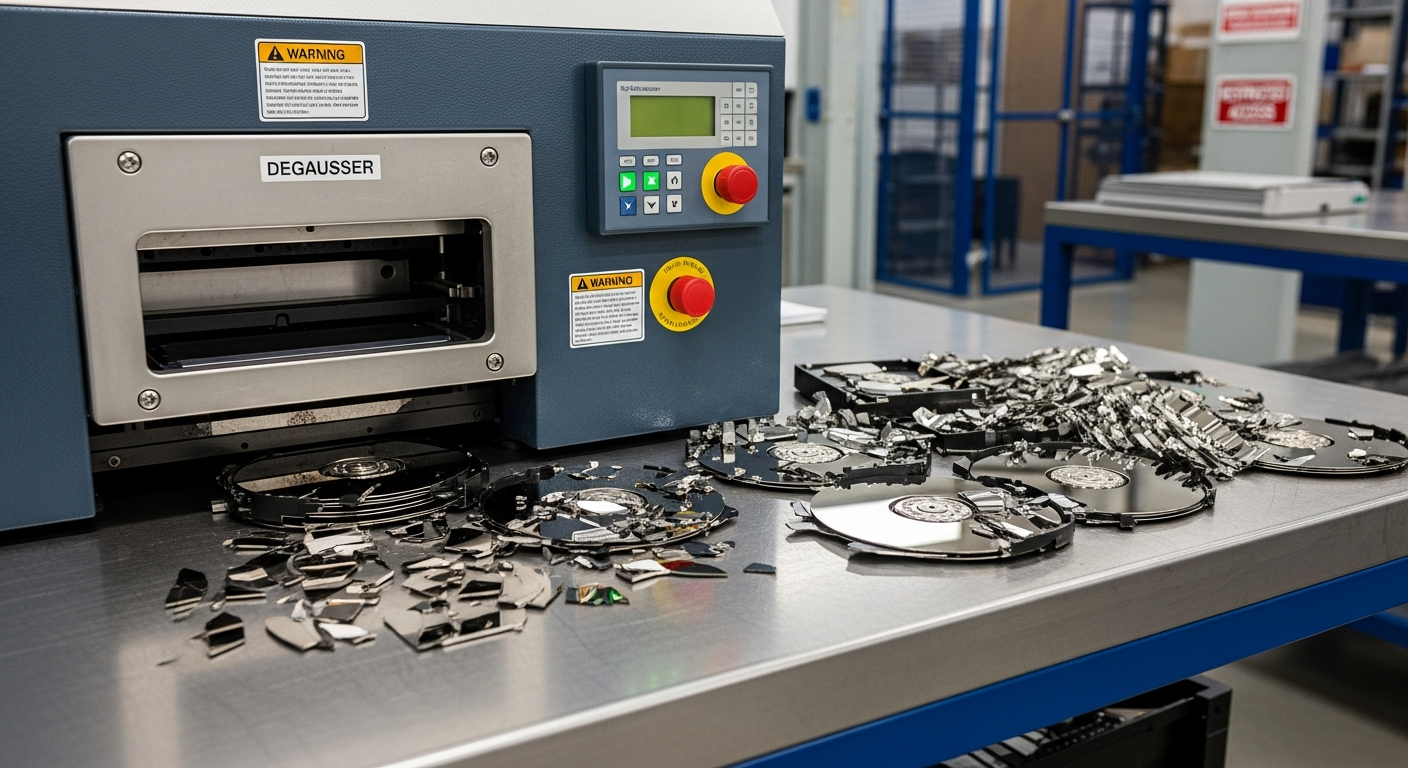
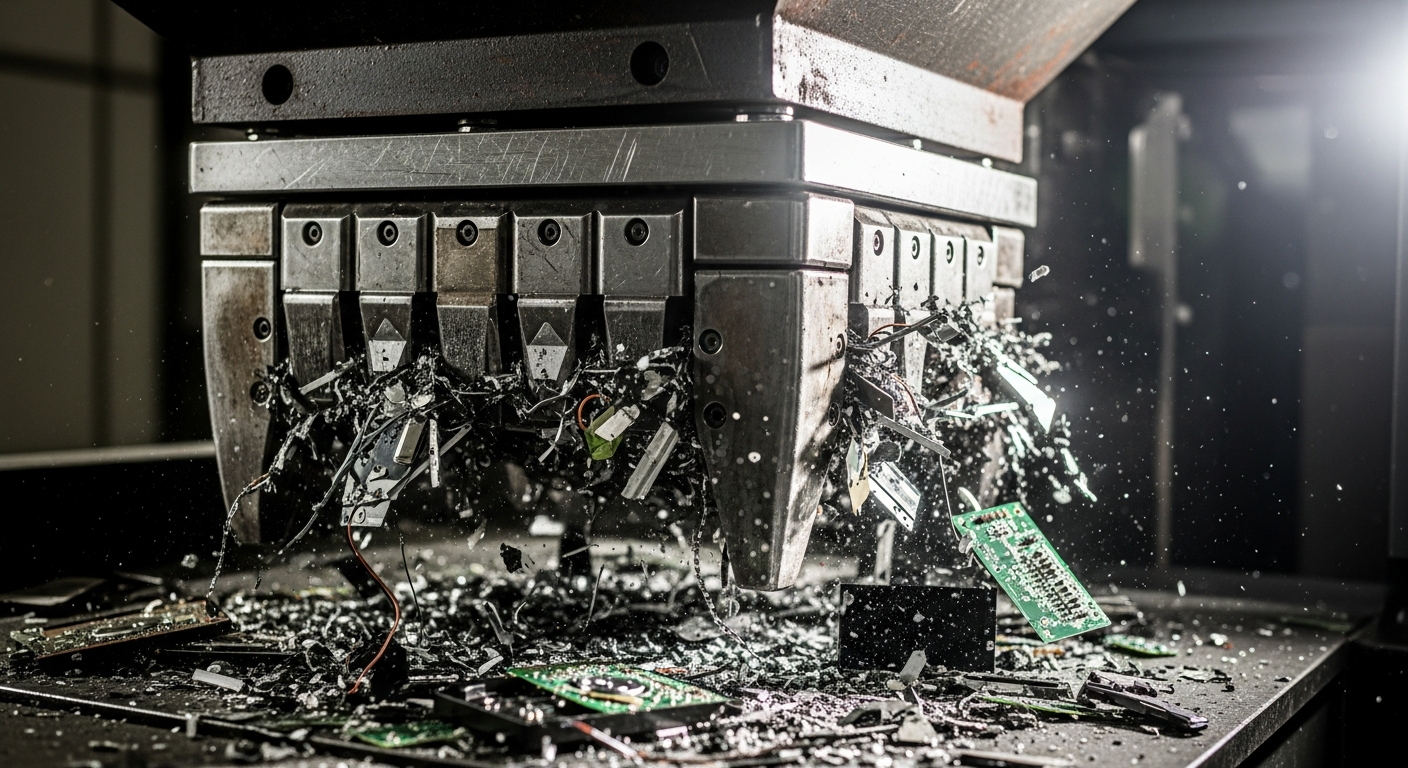
Hard drives and other media that will not be reused are shredded into fragments using industrial-grade shredding equipment. Shredding is irreversible and verifiable, and the technique is matched to the media type and the data sensitivity your policy specifies. Shred certificates document each device by serial number, method, and date.
Degaussing
Industrial degaussers apply a powerful magnetic field that disrupts the magnetic domains on HDDs and magnetic tape. Under NIST SP 800-88 Rev. 2, degaussing is a purge technique for magnetic media, not a destroy method, and it has no effect on SSDs or flash storage. It suits high-volume magnetic media events, often followed by physical destruction.
NIST 800-88 Overwrite
Software-based overwrite informed by NIST Special Publication 800-88 Rev. 2. This method sanitizes supported drives while preserving them for reuse or remarketing. Each overwrite is verified and generates a documented audit trail including the tool used, verification status, and technician sign-off.
Serialized Certificate of Destruction
A free Certificate of Destruction comes with your project. Data destruction events are documented on a serialized Certificate of Destruction, your record of the method applied and the date data was destroyed. It is essential for compliance audits, insurance documentation, and regulatory reporting.
Certificates are delivered digitally and archived in our system. For healthcare organizations, we also provide Business Associate Agreement documentation upon request.
Certificates archived for your compliance records. Copies are available on request from our documentation team.
Standards Our Documentation Supports
Our destruction methods and Certificate of Destruction documentation are designed to support the disposal obligations of regulated industries.
Available for Regulated Industries
Witnessed Destruction On-Site
For organizations that require data destruction to occur before equipment leaves the premises, we offer on-site witnessed destruction with a technician present at your facility. The event is recorded on-site and documented in your closeout package.
Request On-Site ServiceMethod Selection Informed by NIST 800-88 Rev. 2
NIST Special Publication 800-88 Revision 2 describes three sanitization categories, and the right one for a given drive depends on the media type, the sensitivity of the data, and whether the drive is being reused or retired. Clear is logical overwrite, appropriate for low-sensitivity reuse cases on media types where overwrite is verifiable. Purge covers techniques such as cryptographic erase, block-level overwrite with post-write read-back verification, and degaussing for magnetic media only, appropriate for moderate-sensitivity reuse on media types where Purge-level methods are defined. Destroy is physical destruction such as shredding, used when media will not be reused, with the technique matched to the media type and data sensitivity.
Precision E-Cycle's intake workflow assigns each drive to a method based on the client's stated requirements and the drive's media type. The method applied is recorded on the per-drive Certificate of Destruction along with the make, model, serial number, capacity, media type, date, operator initials, and a reference number that ties back to the chain-of-custody log. The COD format is designed to support the disposal evidence obligations of HIPAA, GLBA, FACTA, SOX, FERPA, FISMA, and most contractual data-handling clauses without translation between frameworks.
For drives that arrive loose (pulled from systems being kept in service, removed during a refresh, recovered from off-site storage), we accept them in tamper-evident containers and process them under the same chain-of-custody log as full-system pickups. For organizations whose policies require that media never leave the premises intact, we offer on-site witnessed destruction with a technician bringing industrial shredding equipment to the client site, performing destruction in front of a designated witness, and documenting the event on serialized Certificates of Destruction.
For organizations with recurring drive turnover (scheduled drive refreshes in storage arrays, regular replacement of drives that have hit warranty thresholds, ongoing rotation of mobile media), we offer a recurring pickup arrangement that runs on a cadence agreed during scoping. The recurring arrangement uses the same chain-of-custody and Certificate of Destruction format as one-off engagements, which keeps the audit trail consistent and removes the overhead of re-scoping every pickup. Recurring arrangements are also helpful for organizations subject to defined records destruction schedules under their own retention policies.
The Three Ways Data Destruction Programs Fail
The first failure is applying one method across mixed media. Degaussing is effective on spinning drives and backup tape because it disrupts a magnetic field. Solid-state media stores data in NAND flash cells with no magnetic component, so a degausser passes over an SSD with no effect whatsoever. A program that degausses a mixed load has destroyed part of its data and none of the rest, while holding a certificate that implies otherwise. The same trap catches conventional overwrite on SSDs, where wear-leveling can leave a pass reporting success while data survives in cells the write never reached.
The second failure is aggregate documentation. A certificate covering a pallet, a rack, or a weight tells an auditor that something was destroyed but cannot confirm that a particular asset was among it. That is adequate until someone names a serial number from an asset register, which is exactly what happens in a review. Serial-level certificates are straightforward to produce if the intake process captures serials in the first place, and are impossible to reconstruct afterwards if it does not.
The third failure is scope. Programs are usually built around laptops, desktops, and servers, and then miss the media that does not look like a computer. Backup tape in a storage room. Mobile phones and tablets in a drawer. Multifunction copiers with internal drives that have been retaining scanned documents for years. External drives from a departed employee. USB media in desk drawers. Each is data-bearing, each falls under the same regulatory framework as the laptop next to it, and each is routinely disposed of outside the documented process entirely.
Data Destruction FAQ
Answers to the questions compliance teams and IT directors ask most about certified data destruction.
Service Coverage
Serving Businesses Nationwide
Ready to Destroy Your Data the Right Way?
We handle everything from individual hard drives to full enterprise decommissions. Schedule a pickup or get a free quote for large-volume or on-site destruction projects.