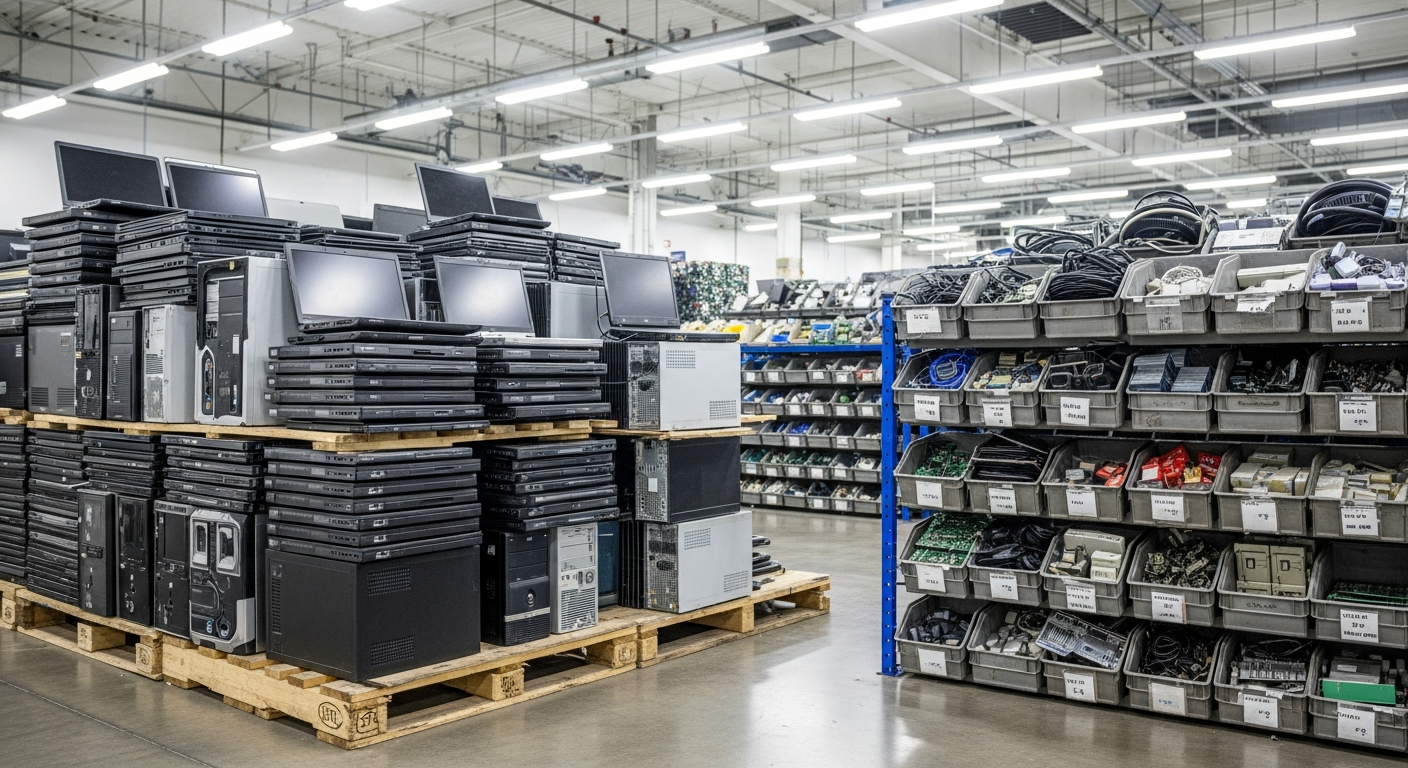
Computer and Laptop
Recycling Services
Desktops, laptops, and workstations, from a single unit to a full fleet refresh. Serial-level documentation, data destruction informed by NIST SP 800-88 Rev. 2, and applicable material routed to R2-certified downstream processors.
All Brands. All Conditions. No Minimum for Drop-Off.
We accept computers and laptops in any condition (working, broken, water damaged, or end-of-life). Brand does not matter. Age does not matter. If it is a computer, we process it with the same documented, certified procedure. Businesses searching for computer recycling near me in Lincoln or the surrounding region can drop off any weekday or schedule a free pickup for qualifying volumes. Businesses in any other city can request a pickup or project quote.
Not sure if we accept something specific? Call 402-540-6965 or email info@precisionecycle.com.
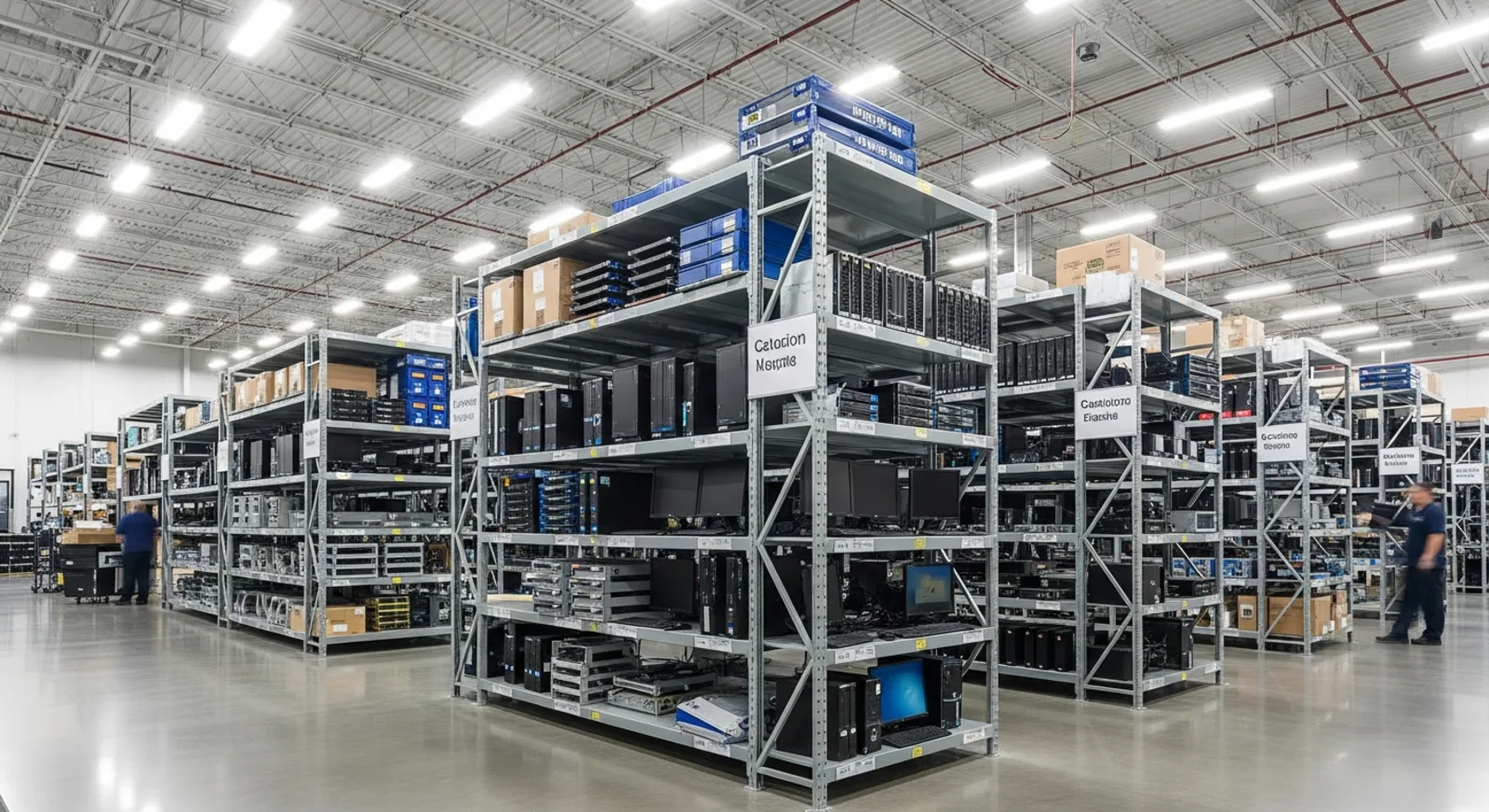
What is computer recycling in Lincoln, Nebraska?
Computer recycling in Lincoln, Nebraska is the certified collection, data sanitization, and materials recovery of end-of-life desktop computers, laptops, workstations, and related equipment. Precision E-Cycle provides this service to businesses and institutions throughout Lincoln and nationwide, including Bryan Health, the University of Nebraska-Lincoln, Lincoln Public Schools, and corporate IT departments across the country. Data-bearing devices are sanitized or destroyed using methods informed by NIST SP 800-88 Rev. 2 and documented to the serial number, and applicable material is routed to R2-certified downstream processors. The result is documented downstream processing and a serialized Certificate of Destruction for the assets processed.
NIST 800-88 informed sanitization, not just for flagged drives
Sanitization informed by NIST SP 800-88 Rev. 2 is applied to the storage devices we receive, regardless of whether they appear to contain sensitive data. Hard drives, SSDs, and eMMC modules are cleared, purged, or physically destroyed depending on media type and your organization's requirements. A verification record is generated per device and included with your Certificate of Destruction.
Near-me service area: Organizations searching for certified computer recycling near Omaha, Lincoln, Kansas City, or Des Moines can schedule pickup, and organizations in any other city can request a pickup or a free quote.
According to IBM's 2024 Cost of a Data Breach Report, the global average cost of a data breach reached $4.88 million. Improper disposal of retired computers is a documented breach vector. Documented sanitization informed by NIST SP 800-88 at end of life reduces the residual risk hardware creates after it leaves your facility.
The EPA and United Nations Environment Programme estimate that approximately 50 million metric tons of electronic waste are generated each year, with computers and laptops among the largest contributors. Responsible recycling through R2-certified downstream processors recovers valuable metals for reuse in new manufacturing.
Our Five-Step Process
Computers move through the same documented process, with data destruction informed by NIST SP 800-88 Rev. 2 at its center.
Schedule Your Pickup
Schedule online or call 402-540-6965. We confirm scheduling around your site, and businesses anywhere can request a free quote. Drop-off is available any weekday at our Lincoln facility, no appointment required.
Asset Logging on Arrival
Devices are logged upon arrival by make, model, and serial number. We generate an itemized asset manifest before any processing begins. You receive a copy of this manifest with your final Certificate of Destruction.
Data Sanitization
Storage devices (hard drives, SSDs, eMMC) are sanitized or destroyed using methods informed by NIST SP 800-88 Rev. 2. Drives receive verified overwrite or physical shredding depending on the drive type and your requirements, and degaussing is used only on magnetic media.
ISO-Certified, Secure Recycling
Sanitized equipment is disassembled and materials are directed to R2-certified downstream processors for component recovery, precious metal reclamation, and responsible material handling. Each material stream is documented on the downstream summary.
Certificate of Destruction Delivered
You receive a serialized Certificate of Destruction for the data-bearing assets processed, documenting the device, destruction method, date, and technician. Delivered digitally and archived for your records.
Certified. Documented. Accountable.
R2-Certified Downstream Processors
We route applicable material to R2-certified downstream processors with third-party auditing and downstream vendor tracking. Downstream records show where your material goes after it leaves your facility.
NIST 800-88 Informed Methods
Data sanitization is not optional or limited to flagged drives. Storage devices in your load are sanitized or destroyed before the unit is recycled, regardless of whether they appear to contain data.
Serial-Level Documentation
Your Certificate of Destruction is not a batch document. Each device has its own serial-level entry documenting make, model, serial number, destruction method, date, and facility reference.
Free Pickup Available
Free pickup is available for a business-scale load or comparable mixed loads. We coordinate scheduling and manage all logistics. You just have the equipment ready.
What Actually Happens to a Computer After You Hand It Off
The single most common question we get from new business clients is what actually happens to a laptop or desktop once it leaves the loading dock. The answer is a sequence designed around two frameworks at once: data sanitization informed by NIST SP 800-88 Rev. 2 and downstream environmental handling through R2-certified downstream processors.
On intake, devices are scanned in by serial number against the pickup manifest the client signed at the door. Storage is removed and routed into the data destruction queue. Drives slated for reuse get verified Purge-level overwrite and a post-write read-back. Drives slated for destruction are physically shredded at our processing facility, with the method matched to the media type and the data sensitivity the client specifies. Either method produces a per-drive entry on the Certificate of Destruction with the date, method, operator initials, and the serial number from the original device.
The chassis itself, separated from its storage, then enters the recycling stream. Batteries are removed and routed to battery processors. Circuit boards are routed to R2-certified downstream processors for precious metal recovery. Steel, aluminum, and plastics are separated and routed to downstream vendors. Each component stream is documented at the volume level on the downstream summary, and the downstream processor records are available on request for clients whose audits require evidence at that depth.
Reuse, Harvest, or Recycle: How the Decision Gets Made
Not every retired machine follows the same path, and the disposition decision has more consequence for a client than most disposal quotes suggest. A four-year-old business laptop with a working board and a healthy battery has genuine residual value. The same chassis with a failed board has value only in its components. A machine with a cracked case and a dead drive has value only as separated material. Sorting those three cases correctly is what determines whether a refresh cycle offsets part of its own cost or simply generates disposal volume.
The obvious worry is the one worth answering directly: if a machine is evaluated for reuse, does that mean data leaves with it. No. Sanitization happens before the disposition decision, not after it. Data-bearing devices are sanitized on intake using methods informed by NIST SP 800-88, and only then does the chassis enter evaluation. A machine that is remarketed leaves with storage that has already been through Purge or Destroy, and the certificate documenting that was issued before the reuse question was ever asked. The sequence is not an implementation detail. It is the whole control.
Components that fail evaluation are harvested rather than discarded. Memory, drives with remaining service life that are being replaced rather than destroyed, power supplies, and expansion cards are recovered where they have genuine remaining value. What is left enters the material stream: boards to R2-certified downstream processors, batteries to battery processors, and steel, aluminum, and plastics to downstream vendors. Each stream is documented on the downstream summary, and the underlying processor records are available for clients whose audits reach that depth.
Computer Recycling FAQ
Answers to the questions businesses ask most about our computer and laptop recycling service.
Service Coverage
Serving Businesses Nationwide
Ready to Recycle Your Computers?
Schedule a free pickup or drop off at our Lincoln facility any weekday. Your equipment gets the same documented process from pickup to final certificate.