Computer Recycling in Kansas City, MO for Business IT
Retiring desktops, laptops, monitors, and loose drives from Missouri-side Kansas City offices? Precision E-Cycle scopes the load in one project review, matches each drive to a sanitization method, schedules free pickup for qualifying business volumes, and processes everything in Lincoln, Nebraska.
What Does Computer Recycling Cover for Kansas City Organizations?
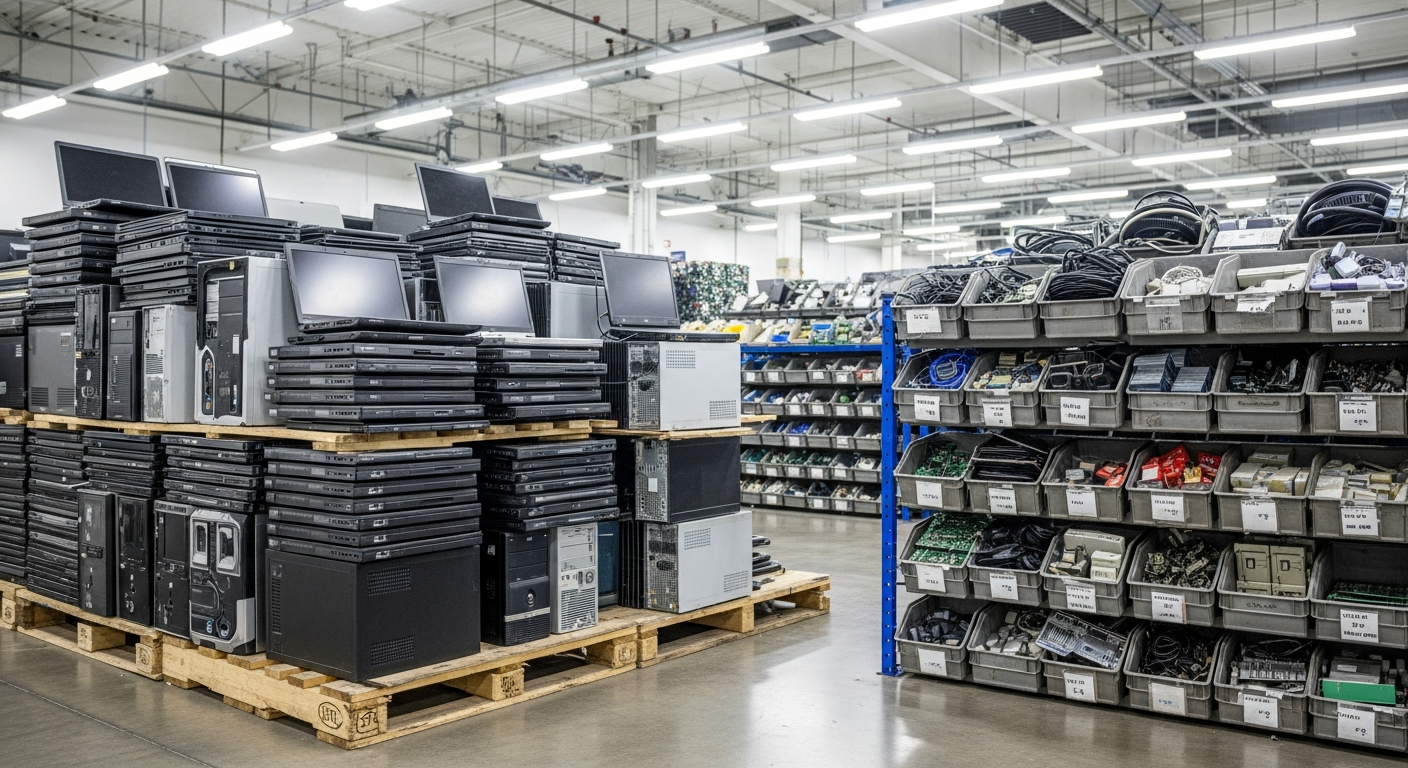
Computer recycling in Kansas City, MO is the retirement of business desktops, laptops, monitors, and the drives inside them, with the data decision made before the hardware decision. Precision E-Cycle collects your equipment by pickup, applies sanitization methods informed by NIST SP 800-88 Rev. 2, and processes every load in Lincoln, Nebraska.
On the Missouri side of the metro, Missouri DNR says businesses, charities, schools, churches, and public agencies cannot legally discard certain electronics in Missouri landfills. Across the metro, large federal offices, the healthcare and financial-services employers OneKC lists, and campuses such as UMKC run the kind of refresh that retires desktops, laptops, and monitors together.
What Should Kansas City IT and Compliance Teams Confirm?
One review for the full project scope
Asset list, data questions, site eligibility, and equipment outcomes are settled in one conversation, so procurement, IT, and security sign off on the same scope before anything moves.
Method matched to media, not to habit
Clear, Purge, and Destroy outcomes follow NIST SP 800-88 Rev. 2 guidance on media type and information sensitivity. Reviewing those choices before disposition helps teams reserve destructive methods for cases that call for them and separate reusable equipment from media that needs a different path.
Management systems you can review
Precision holds ISO/IEC 27001:2022 for information security, ISO 14001:2026 for environmental management, ISO 9001:2015 for quality, and ISO 45001:2018 for occupational health and safety. Weigh them alongside the equipment scope and your own obligations.
Request Service
Ready to Recycle?
Pickup is free for qualifying business volumes. Schedule yours or contact us with questions.
Related Services
How Does a Kansas City Computer Recycling Project Work?
Project review and scope
Send your asset list and site addresses. We scope the categories, the pickup for each site, and the data-handling and record options that fit, so the scope is agreed before a date is set.
Pickup and Lincoln intake
Free pickup covers your Missouri-side site, and loads are processed in Lincoln, Nebraska. The review settles how your list is used at intake and how count differences are resolved, so your own register stays the control copy.
Data decision for each device
For each data-bearing drive in scope, the outcome (clear, purge, or destroy) is chosen by media type and data sensitivity, informed by NIST SP 800-88 Rev. 2. Purge can keep a working machine eligible for reuse; destruction is reserved for media that needs it.
Reuse, recycling, and documentation
Working machines are reviewed for reuse where eligible, and the rest is routed to R2-certified downstream processors. The review confirms which close-out records you receive for the agreed scope.
Which Records Should You Confirm for a Kansas City Project?
A Kansas City computer recycling project raises two separate questions: what happens to the data on each drive, and what happens to the hardware afterward. Settle them separately, because a sanitization method does not decide reuse, and a recycling route does not settle the data.
The two decisions, side by side
For a fleet, separate equipment that is owned, leased, or assigned to a specific department before pickup planning. Those distinctions can affect who authorizes release and which data owner signs off; confirm requirements with your own teams. Flag any legal or asset-return hold separately; either can change whether a device is released for pickup.
The documents to ask any recycler for
- Whether an intake inventory is available and how it can be compared with the list you supplied
- What data-handling information is recorded, and for which media
- What movement information, if any, is available for the agreed scope
- What reuse or recycling outcome information is available
- Which downstream route applies and what evidence can be provided; do not infer a route from certification language
NIST SP 800-88 Rev. 2 section 4.6 lists certificate fields such as manufacturer, model, serial number, media type, sanitization method, tool and version, verification method, and verifier identity and date. Use that list as the benchmark when you compare any recycler's records.
Ask for a sample record
Ask for a sample of Precision's records during the project review and compare its fields with the NIST list and your internal audit needs. If resale or buyback matters to you, raise it at the same time.
Compare mixed-device loads with e-waste recycling
Key takeaway
Keep the data decision separate from the material decision. A sanitization method addresses the storage media; it does not establish whether the computer is eligible for reuse or which recycling route applies. Confirm both the hardware outcome and the available records for the agreed project scope.
Which Missouri and Federal Rules Can Apply to Retired Computers?
A computer recycling project can raise separate questions about the hardware as material and the information stored on it. Your legal, security, and environmental teams determine which duties apply; do not treat a recycler's services or records as a substitute for your organization's obligations. The frameworks below are limited to the scope described by their primary sources.
Missouri: the material side
Missouri DNR, applying RSMo 260.350 to 260.430, says businesses, charities, non-profits, schools, churches, and public or governmental agencies cannot discard certain electronics in Missouri landfills and must properly manage those items. The restriction covers specified items and organizations, not every device. Ask your environmental or legal team whether an item falls within the rule.
- Reuse of working equipment, which DNR fact sheet PUB2333 lists as an option before recycling
- Recycling of eligible electronics, with the applicable route confirmed for the material
- Hazardous waste management where an item is classified that way
- Under 40 CFR Part 273, the material and handler category determine whether universal-waste standards apply; the rule does not cover every device or battery by default
The data side is federal, not Missouri
For owners or licensees of personal information about Missouri residents, RSMo 407.1500 requires notice after a breach of security. It does not create a general destruction duty for businesses disposing of that information. IT and compliance teams should classify breach-notice duties separately from device-disposal questions in their project records.
Where federal duties do apply
HIPAA applies to covered entities and business associates managing ePHI; the FTC Safeguards Rule covers certain financial institutions; the FTC Disposal Rule applies to consumer-report information held for business purposes. Each rule has its own scope. Your legal or compliance team decides which, if any, covers a device.
That scoping matters in a metro where healthcare systems and financial institutions operate alongside large federal offices. A retired clinical workstation and a retired lending laptop can fall under different federal rules, and a back office machine may fall under neither. Your legal or compliance team decides which apply to your equipment.
Key takeaway
Keep material management separate from data protection. Missouri's landfill restriction applies to certain electronics and listed organizations, while federal privacy and security rules are limited to their own covered entities and information. Ask your environmental and compliance teams to document which requirements apply to each equipment group.
How Should a Kansas City Organization Prepare Computers for Pickup?
When several Missouri-side sites are involved, procurement teams can keep ownership and location visible in the asset list. Kansas City loads are processed in Lincoln, Nebraska, so review how the supplied list will be used at intake and which records, if any, can be compared with it. Confirm the site and load details before scheduling.
- Prepare the asset identifiers your own controls require, and confirm which fields are useful for project review
- Flag the devices your policy says must be destroyed rather than reused
- Separate loose drives and media from the machines they came out of
- Mark leased equipment so return terms are reviewed before any sanitization
- Note which sites are on the Missouri side of the metro and which are not
- Identify a site contact and confirm how the agreed equipment handoff will be documented
Get the handoff in writing
Ask which handoff and intake records come with your pickup and how count differences are resolved. Get the answer in writing during the project review, so your release approval and the intake record can be matched later.
On pickup day and at intake
On pickup day, your site contact releases the equipment listed for that site, and the load travels to Lincoln for intake. Agree beforehand how intake counts are compared with your list and how differences are resolved. Your own list remains the control copy for your asset records.
- Ask whether intake quantities can be compared with the list you supplied
- Confirm how data-bearing media and other hardware are handled within the agreed scope
- Confirm the sanitization outcome for each media class
- Confirm which units go to reuse review and which to R2-certified downstream processors
Which service fits the project
Request a free quote and we scope the categories, reuse options, any resale terms, and documentation with you. Scheduling follows, once the volume, location, and equipment mix are known. Confirm any project-specific charges before scheduling.
See laptop recycling for business fleet retirements
Explore IT asset disposition for a whole-fleet refresh
Key takeaway
Prepare the list and separate devices by ownership, site, and data handling before scheduling. Ask the project team to confirm the pickup plan for the location and volume, the applicable sanitization options, and the records available for the agreed scope. Keep your own inventory as the control copy.
What Do Kansas City Businesses Ask About Computer Recycling?
Request Service
Ready to Get Started in Kansas City?
Get a free quote or send us a message about your project, and we scope pickup and documentation around your site.