Data Destruction in Des Moines
Retiring hard drives, SSDs, and tape from Des Moines offices? Precision E-Cycle matches a method to each media type, logs serial numbers at intake in Lincoln, and offers free pickup for qualifying business volumes.
What does data destruction involve for a Des Moines organization?
Precision E-Cycle provides data destruction in Des Moines for information security leaders, privacy officers, and IT asset managers retiring hard drives, solid state drives, and tape. Methods are informed by NIST SP 800-88 Rev. 2 and matched to each media type, and the media is picked up and processed at Precision's only facility, in Lincoln, Nebraska.
The common gap for a Des Moines security or privacy lead is a retirement list that lumps solid state drives in with hard disk drives. NIST SP 800-88 Rev. 2 warns that overwrite habits carried over from magnetic drives can expose data on flash media. Each drive type therefore needs its own method decision before equipment leaves the building.
What does a scoped data destruction plan clarify?
Media stays identifiable
Separate hard drives, solid state drives, and other listed media so the method decision can follow the device. Keep unknown types open for review.
Methods are tied to sensitivity
NIST SP 800-88 Rev. 2 is the reference for media sanitization. Use it to choose a method that fits each media group, its data, and its intended next use.
Evidence is agreed in advance
Precision records serial numbers at intake and reports by serial number. A free Certificate of Destruction comes with the project, and the fields and format for each media group are settled in project review before work starts.
Request Service
Ready to Recycle?
Pickup is free for qualifying business volumes. Schedule yours or contact us with questions.
Related Services
How does a data destruction project run?
Identify each media group
List hard drives, solid state drives, NVMe and M.2 drives, flash drives, memory cards, external drives, or tape media. Keep different types distinct.
Set the handling decision
Ask the policy owner to match the media and data sensitivity with the intended next use. Do not assume a single method fits all groups.
Confirm scope and pickup
Review what is accepted, who authorizes release, and which records are requested. The project review then plans pickup, which is free, and processing at the secure Lincoln, Nebraska facility.
Reconcile the evidence
Precision logs serial numbers at intake and reports by serial number. Compare that report, and the certificate fields agreed in review, with your approved media list.
Which destruction method fits each media type in a Des Moines inventory?
Choose the method from the media type and the data it holds, not from the device it came out of. Precision E-Cycle accepts hard disk drives, solid state drives, NVMe and M.2 drives, USB flash drives, memory cards, external hard drives, and LTO or magnetic tape media. Record each type, whether it is still installed, and its intended next use.
Storage media Precision accepts
- Separate hard disk drives from solid state drives and other media types in the inventory.
- Identify the available model number, device identifier, quantity, source equipment, and current status.
- Mark media whose type or ownership is unknown instead of assigning it an assumed category.
- Ask the policy owner to identify the data sensitivity and intended next use for each group.
Use NIST as a reference, not as a substitute for a decision
According to NIST SP 800-88 Rev. 2, sanitization is a process that makes access to target data infeasible for a given level of effort. Precision's methods are informed by that guidance, while the buyer's approved policy and the media type determine the choice. NIST is a standard, not a certification held by the service provider.
Method selection
Match the chosen approach to the media type, data sensitivity, and intended next use. Review uncertain cases before the equipment is transferred.
A sanitization plan should explain which group it covers and why that method was approved. A device family label cannot show whether every item shares the same media, condition, or data sensitivity. If a server holds several drives, or the drives were already pulled, tie each media entry to the source record with a shared identifier or group label.
- Record the media group and the source computer, server, array, or other listed equipment.
- Identify who approved the method and which organizational policy informed the decision.
- Keep unknown media status as an exception for review rather than marking the group complete.
- Confirm whether the project record should describe the method, the item, or both.
Separate the equipment choice from media handling
For equipment that could be reused, keep the media decision separate from the equipment decision. Record whether the device is being retained, transferred for reuse, or removed from service, then ask the policy owner to review the storage media on its own. This prevents an equipment outcome from standing in for a media method choice.
Self-encrypting drives and cryptographic erase
NIST SP 800-88 Rev. 2 treats cryptographic erase as a purge technique that can sanitize a self-encrypting drive quickly under the right conditions. Its effectiveness depends on the drive's cryptographic capabilities and on preconditions such as how the keys were managed. If your team relied on encryption, note which drives are self-encrypting so the project review can weigh that evidence.
Where shredding fits, and where it stops
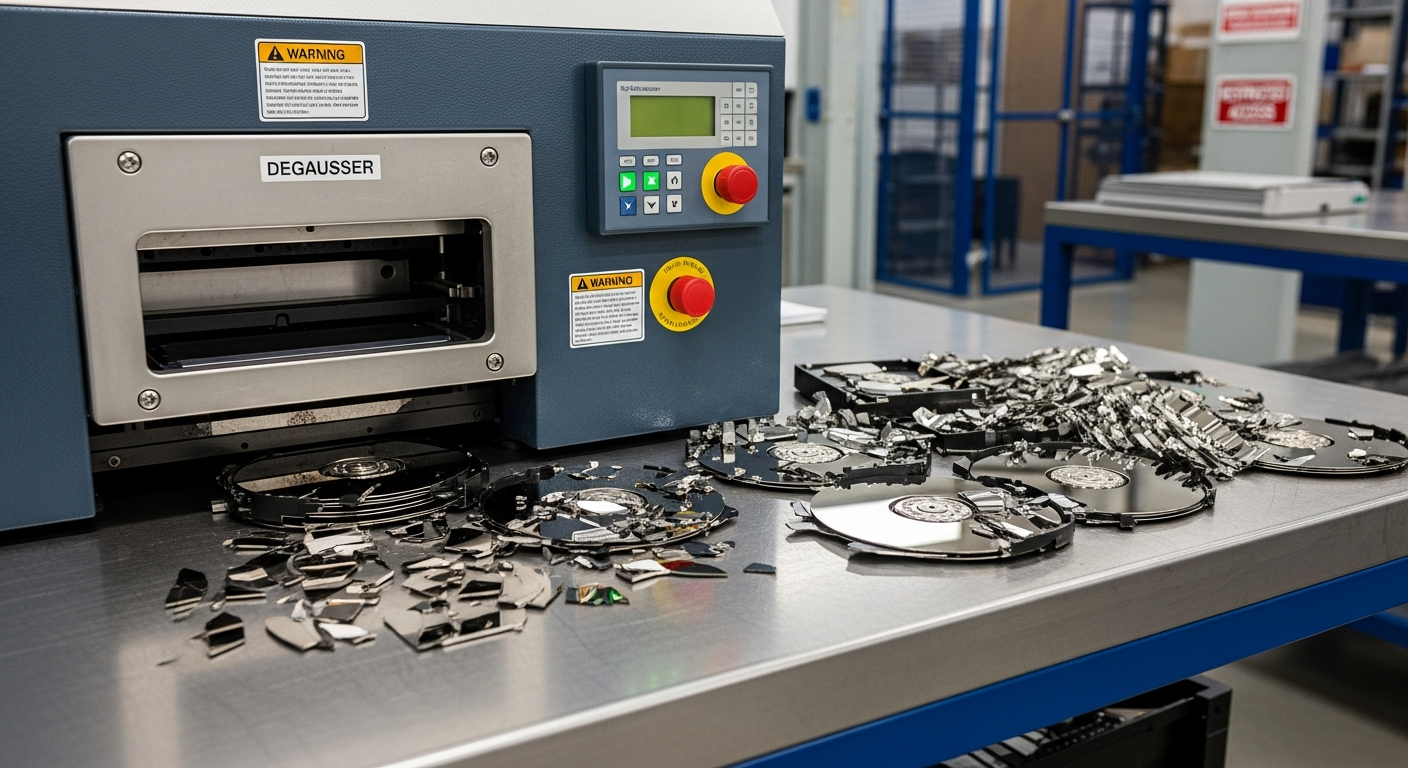
Shredding is one destroy technique, but NIST SP 800-88 Rev. 2, section 3.1.3, says pulverize and shred techniques should be avoided for anything but the lowest security categories of data. Select the method from the media and its data sensitivity, and record the decision before marking a group ready.
When shredding suits a drive group
Keep items with uncertain media type separate
A device may arrive without a readable label or enough detail to identify its storage. Record the source equipment, what the reviewer can observe, and the question that remains open. Do not rename an unidentified item as a particular drive type to simplify the list.
Key takeaway
One approved method per media group, with a record naming who approved it.
What evidence should a data destruction project produce?
A Des Moines data destruction project should produce a record that ties every drive to its method and its source equipment. Precision logs serial numbers at intake and reports results by serial number, and the buyer decides which identifiers, quantities, and exceptions the record must show. The certificate fields and format are agreed in the project review.
- Choose identifiers that let the buyer connect each media item to its source group.
- Record quantities by media type instead of combining unlike devices in a single count.
- Name any exception that changed the method, scope, or status of an item.
- Agree which details should appear in the certificate or closeout document.
Keep the evidence matched to the approved scope
A project record cannot decide whether a method meets the organization's policy. The security or privacy owner should approve that decision before the media is released.
Credentials and their limits
Precision E-Cycle holds ISO/IEC 27001:2022, ISO 14001, ISO 9001, and ISO 45001 certification and routes material to R2-certified downstream processors. These describe Precision's own management systems, not any buyer's legal duties or data outcome.
Before requesting a closeout record, decide whether a reviewer needs each item's identifier, a group quantity, or both. Note when an identifier is unavailable and why. This keeps an unresolved label distinct from a verified value in the approved media list.
- Set the requested certificate fields during the project review.
- Keep method and quantity information attached to the media group it describes.
- Identify which changes or unresolved details need to remain in the closeout record.
- Compare the returned information with the approved scope before the organization archives it.
Preserve the custody questions the buyer actually has
Does an auditor need to see how each drive was identified and handed over? List the identifiers and handoff details to capture at pickup, so the chain of custody runs from your site to serial logging at intake in Lincoln. Define the format and level of detail during project review.
How the certificate of destruction is structured
Key takeaway
Agree before pickup how serial numbers are captured at intake and how exceptions reach the final report.
How should Des Moines teams prepare media for pickup and project review?
Before a project review, prepare a media list that names each type, its quantity, available identifiers, source equipment, and current status. Separate drives that have been removed from those still associated with computers or servers. Keep unknown ownership and unresolved data decisions visible. This gives the security or privacy owner a defined scope to review.
- Identify who can authorize release of the listed media and source equipment.
- Separate installed media, removed media, and unknown media status in the inventory.
- Record the intended next use and the method decision for each approved group.
- List certificate fields, custody details, and exceptions the organization wants reviewed.
Pickup from Des Moines, processing in Lincoln
Searching for data destruction near me from a Des Moines office? Schedule a pickup: your media is collected from your site and processed at Precision E-Cycle's secure Lincoln, Nebraska facility. Gathering drives from both Des Moines and West Des Moines offices? List each address separately so the pickup record stays clean.
Financial services and health care anchor the metro's employer base across Des Moines and West Des Moines. In sectors like these, the security or privacy owner, not facilities, should sign off the media list before release.
Ask whether on-site destruction applies
- Keep the media list consistent with the approved source equipment inventory.
- Request a free quote and pickup plan before the collection scope is set.
- Use project review to set certificate fields and custody details for this media scope.
- Retain open questions about method, ownership, or identifier gaps with the relevant media group.
Decide what can be closed and what remains open
A project can be discussed before every question is resolved. Mark media groups that are ready for a method decision, items that need an internal policy owner, and fields that must be confirmed in review. Cost is discussed once that scope is confirmed, so no document, method, or figure is treated as settled early.
Key takeaway
Request a project review to set pickup, accepted media, the selected method, and the records for the approved scope.
Des Moines Data Destruction Questions
Request Service
Ready to Get Started in Des Moines?
Get a free quote or send us a message about your project, and we scope pickup and documentation around your site.