Computer Recycling in Des Moines
Retiring desktops, laptops, and workstations across Des Moines offices? Precision E-Cycle offers free pickup for qualifying business volumes, logs serial numbers at intake in Lincoln, and matches a data method to every drive.
What does computer recycling in Des Moines involve?
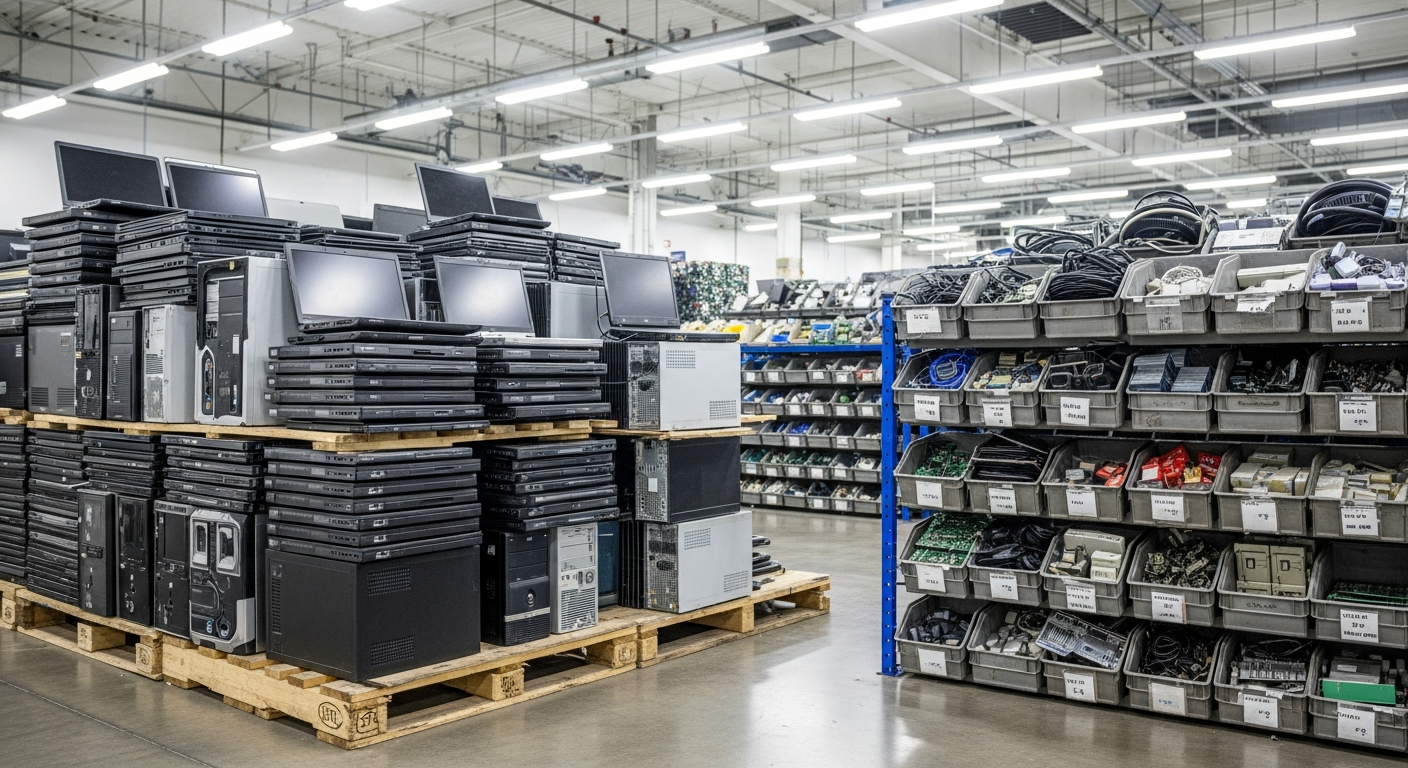
Precision E-Cycle provides computer recycling for Des Moines businesses retiring desktops, laptops, and workstations, with pickup and processing at its only facility, in Lincoln, Nebraska. Serial numbers are logged at intake, and each storage drive gets a data method informed by NIST SP 800-88 Rev. 2, matched to the media and the data it held.
Higher education sits alongside the metro's financial services and health care employers across Des Moines and West Des Moines. For an IT asset manager in any of them, the hard part of an endpoint refresh is usually the register: loaned laptops, towers with unknown drives, and devices on a retention hold.
What does a defined computer scope give your team?
A reviewable asset list
Grouping computers by type, owner, site, condition, and storage gives the reviewer a clear scope. Unresolved equipment remains visible as an exception.
A deliberate media decision
Separating computers with storage from other equipment lets the organization choose a method based on media and its own policy. It avoids assuming one path fits every device.
Records that reconcile
Serial numbers logged at intake let the serialized report be checked against your inventory line by line. Certificate fields, format, and any buyback terms are confirmed in project review.
Request Service
Ready to Recycle?
Pickup is free for qualifying business volumes. Schedule yours or contact us with questions.
Related Services
How does a Des Moines computer recycling project run?
List the computer group
Record device type, owner, location, condition, and quantity. Mark equipment that is leased, unidentified, or outside the approved scope for a separate review.
Identify storage media
Separate computers with hard drives, solid state drives, or other listed media from devices without known storage. Ask the policy owner to set the method for each group.
Confirm collection scope
Review what is accepted, who can approve release, and how equipment will be staged. Pickup is scheduled around your site, and collected computers travel to the Lincoln facility for processing.
Reconcile the project record
Serial numbers logged at intake feed a serialized report. Compare it with the approved inventory, using the certificate fields and format agreed in project review.
Which computers go on a Des Moines recycling inventory?
A Des Moines computer recycling inventory lists each desktop, laptop, workstation, and thin client by type, owner, site, condition, quantity, and storage status. When an organization operates across both Des Moines and West Des Moines buildings, the site column can matter as much as the count.
- Record the device type and quantity, then keep different computer types on separate lines when they can be identified.
- Add the owning department, the site that controls release, and the condition known to the project owner.
- Mark whether storage is present, removed, unknown, or awaiting a policy decision before the group is mixed.
- Separate leased, damaged, unidentified, or out of scope devices until an authorized person reviews them.
Which computers are on the accepted equipment list?
The accepted list names desktops and towers, laptops, MacBooks and iMacs, all-in-one computers, workstations, thin clients, Chromebooks, and gaming computers. It also names monitors, hard disk drives, solid state drives, external drives, flash drives, and memory cards. Describe a proposed group in those categories, and never assume an item is accepted because it sat beside a computer.
See every category on the accepted equipment list
How should asset tags and serial numbers be recorded?
Keep each asset tag or serial number beside the device it describes, and use the same notation from review through closeout. Precision logs serial numbers when equipment is received in Lincoln, so identifiers on your first list can be matched against the serialized report. IT asset managers usually expect that report to match their own register.
- Use a stable identifier where one is available and retain it with the original asset list.
- Describe the condition in plain terms that the team can apply consistently across the inventory.
- Keep unknown or conflicting details visible instead of filling them with an estimate.
- Confirm that each proposed category appears on the accepted list before collection is planned.
Clearing a storeroom that holds more than computers?
Storerooms rarely hold computers alone. Monitors, loose drives, keyboards, mice, cables, cords, and chargers all appear on the accepted list, so record each category on its own line. A reviewer can then tell the computers from the storage media and the accessories instead of treating the room as one device type.
Mixed office electronics: e-waste recycling in Des Moines
Where should exceptions be recorded?
If an item cannot be matched to an owner, identifier, or known condition, keep that gap attached to the item in the inventory. Do not let the group label erase uncertainty that matters to release or data handling. A reviewer can then distinguish what is ready for discussion from what still needs an internal decision.
Key takeaway
A computer group is ready for review when its ownership, device types, condition, and storage questions sit in one inventory.
How should data on retired Des Moines computers be handled?
Every computer with a hard drive or solid state drive needs a data decision before it leaves your control. Precision E-Cycle's data destruction methods are informed by NIST SP 800-88 Rev. 2 and matched to the media type and the sensitivity of the data. Record the chosen method by media group rather than as one label for the whole load.
- Identify computers with hard disk drives, solid state drives, or other accepted storage media.
- Ask the policy owner to determine which records or retention holds affect release.
- Keep media type and intended next use visible when a method is selected.
- Request a project review when the storage status or organization policy is unresolved.
Does a computer leave your control at pickup?
It does, and the guideline treats that handoff as a decision point. NIST SP 800-88 Rev. 2 lists media "sent to a recycling facility" among the ways control of storage media can change. Settle the method for each storage group before the pickup date, while the owner can still decide.
Leased laptops count too
NIST SP 800-88 Rev. 2, section 4.3.4, says media control can change when equipment is "returned from a leasing agreement" as well as when it is sent to a recycling facility. Settle the data method for leased laptops before they go back to the lessor.
When does shredding fit a computer drive?
Per section 3.1 of NIST SP 800-88 Rev. 2, shredding should be avoided for anything but the lowest security categories of data. A drive from a finance or clinical workstation may call for a different method than one from a training room PC. Let the data category, not habit, choose the method for each group.
Compare drive destruction methods
What do Precision's certifications cover?
Precision E-Cycle holds ISO/IEC 27001, ISO 14001, ISO 9001, and ISO 45001 certifications, covering information security, environmental, quality, and occupational health and safety management. Those describe Precision's own management systems. The project record describes your computers, so agree its contents separately.
- List which media group the selected method covers and identify who approved it.
- Separate open questions from decisions already authorized by the organization.
- Agree which method details should appear in the certificate or closeout record.
- Reconcile the final record with the same computer identifiers used in the project inventory.
What if a data question is still open?
Keep an unresolved data question visible from the first list through the project review. Record what is known, name who can decide the rest, and note the method question apart from ordinary equipment sorting. If the approved method changes after review, update the project record to match the final decision.
Key takeaway
Settle each drive's method before pickup, informed by NIST SP 800-88 Rev. 2 and matched to the media and the data it holds.
What happens between a Des Moines pickup and the Lincoln closeout?
Des Moines computers leave the metro by pickup and are processed at Precision E-Cycle's secure Lincoln, Nebraska facility. Serial numbers are logged at intake, drives follow the method agreed for their group, and recovered material is routed to R2-certified downstream processors.
- Name the internal owner who can approve the computer group and any exceptions.
- Group equipment by site, device type, condition, owner, and known storage status.
- Identify how the organization wants groups staged and labeled for review.
- Keep any access requirements or unresolved details open until the project scope is confirmed.
How do Des Moines offices schedule pickup?
Offices in Des Moines and West Des Moines start with a pickup request and a free quote. Computers are collected at your site and processed at the secure Lincoln, Nebraska facility, and the review sets which computers go and when.
How do the inventory and the pickup plan stay matched?
Large local organizations in financial services and health care often work from many sites across the metro. For any multi-site refresh, keep each site's computers on their own lines, and keep a department with complete tags apart from one with a mixed group.
Planning a wider retirement? See IT asset disposition
What will the closing report show?
Precision logs serial numbers at intake and provides serialized reporting on the equipment received. The exact certificate fields and format, whether device by device or by lot, are agreed in the project review. Commercial terms depend on the computers, volume, and records requested, so they are set in that review against your inventory.
- Confirm which groups are eligible and which remain pending review before the equipment changes custody.
- Agree on the identifiers, counts, exceptions, and certificate fields that the project record should contain.
- Confirm buyback terms, if considered, during project review rather than assuming a value in advance.
- Keep the computer disposal scope separate from any related service that has its own page and review.
How should the approved scope carry into closeout?
Keep the approved inventory as the reference for the final report. If a device is added, removed, or reclassified during review, mark the change against its group and identifier. Then file the reconciled report under your organization's own record retention policy.
Key takeaway
The project review fixes the collection scope, accepted computers, records, and any terms before any equipment moves.
Des Moines Computer Recycling Questions
Request Service
Ready to Get Started in Des Moines?
Get a free quote or send us a message about your project, and we scope pickup and documentation around your site.