
Electronics Recycling
St. Louis, Missouri.
Plan With Confidence.
St. Louis planning starts with local sector context, clear asset records, Missouri disposal review, data-security questions, and a documented project handoff for organizations evaluating electronics retirement across clinical, corporate, research, and public environments.
Electronics Recycling Planning for St. Louis Organizations
St. Louis, Missouri organizations can request electronics recycling and IT asset disposition today. Tell us what you are retiring and we scope pickup, documentation, and data destruction around your site, with processing at our secure Lincoln, Nebraska facility. Ask about free pickup.
St. Louis organizations planning an electronics disposition project face a distinctive mix of healthcare, academic medicine, aerospace, geospatial intelligence, financial services, and industrial technology. The region’s Central West End, Midtown, Clayton, West County, and North St. Louis corridors connect clinical, corporate, research, and public-sector environments with different records, approval paths, and handoff requirements for retiring equipment.
Missouri planning begins with the organization’s inventory, data classification, custody records, and disposition approvals. MDNR guidance and Missouri law identify restrictions for certain hazardous electronics handled by businesses, schools, nonprofits, churches, and public agencies. Separately, RSMo § 407.1500 addresses notice duties after qualifying breaches involving unencrypted personal information belonging to Missouri residents.
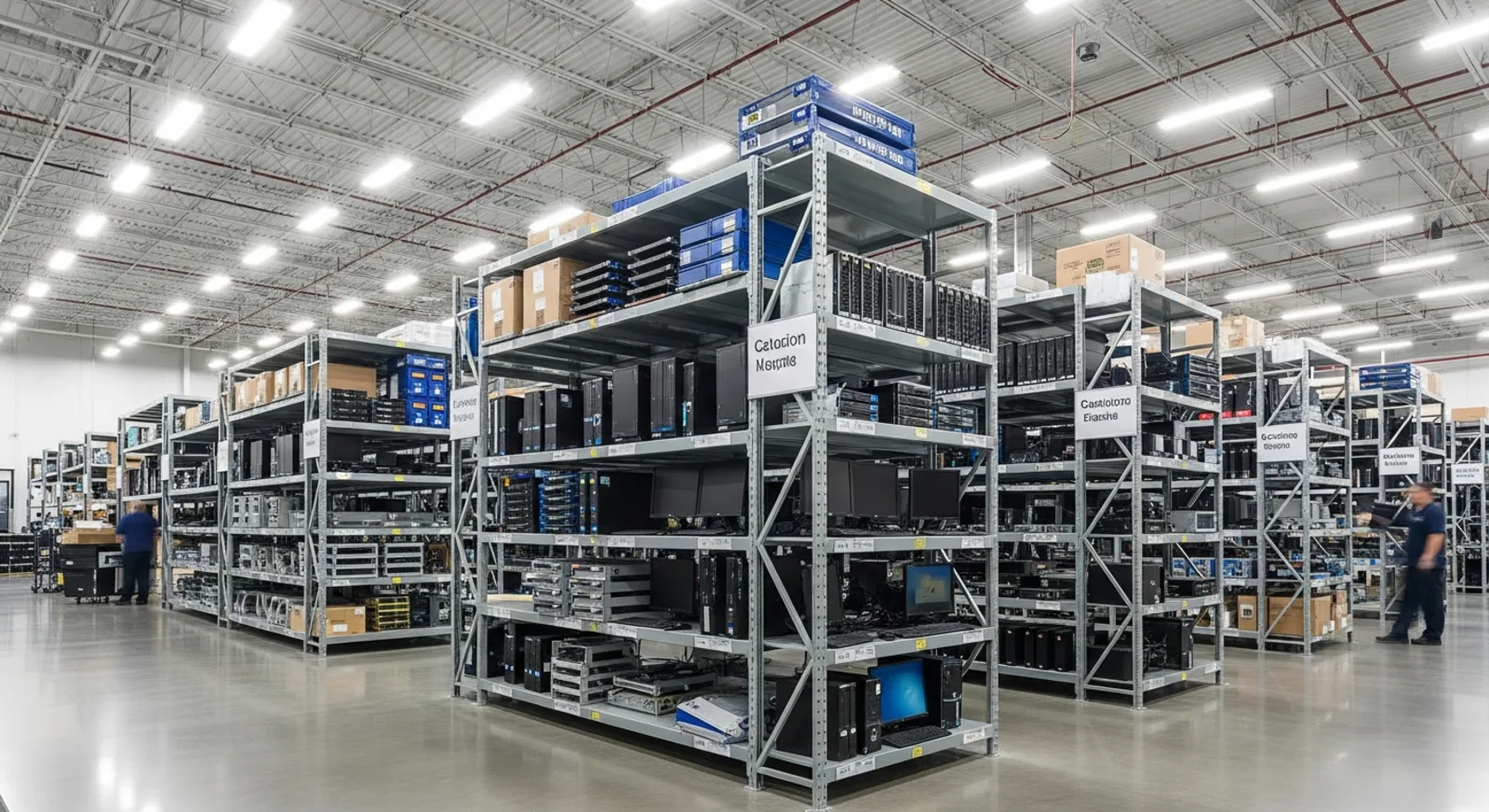
Electronics We Recycle in St. Louis
From a single hard drive to a full data center decommission. If it is accepted within the confirmed scope, we coordinate responsible processing with R2-certified downstream vendors.
Built for St. Louis's Compliance-Sensitive Organizations
Organizations in St. Louis can use these sector examples to define data, custody, sanitization, and documentation requirements, then request a project quote.
From First Call to Final Certificate
Share your requirements and we scope logistics, documentation, and data destruction methods around your project.
Contact and Scope
Reach us by phone or the contact form to describe the equipment categories, data sensitivity, and documentation requirements. We scope pickup logistics and documentation around your site and send a quote, with processing at our secure Lincoln, Nebraska facility.
Serial-Level Intake
Devices are logged by make, model, and serial number against a chain-of-custody manifest before they change hands, with the fields, locations, and signing process set out in your written scope.
NIST 800-88 Sanitization
Data-bearing media is sanitized using methods informed by NIST SP 800-88 Rev. 2, which describes Clear, Purge, and Destroy. The method is chosen by media type and your policy, and it is recorded for each device.
Certificate and Downstream
You receive the documentation set agreed in your scope, including asset manifest, destruction evidence, and downstream records where applicable, with applicable material routed to R2-certified downstream processors.
What St. Louis Organizations Should Document
St. Louis project planning starts with a defensible picture of what exists, who controls it, and what information may remain on it. That picture matters across Central West End medical campuses, Downtown offices, Clayton headquarters, research facilities, and public agencies, where equipment ownership and approval paths may differ.
A useful record has four parts. Asset identity: manufacturer, model, serial number, asset tag, device type, and known data-bearing components. Custody: the department, physical custodian, owner, facility, and person responsible for authorization. Data review: data categories, encryption questions, retention holds, and security review status. Disposition evidence: approval records, custody documentation, exceptions, and the evidence expected for the final decision.
Missouri’s cited electronics framework makes the disposal route part of the record for certain organizations. MDNR states that businesses, schools, nonprofits, churches, and public or governmental agencies cannot legally discard certain hazardous electronics in Missouri landfills. A planning file should preserve the applicable rule reference and internal approval.
For data-bearing equipment, St. Louis teams should separate factual documentation from legal conclusions. RSMo § 407.1500 addresses notice duties after qualifying breaches involving unencrypted personal information, including specified identity, financial, and medical data combinations. The project record can show review questions, owners, decisions, and escalation points.
Request a quote and we scope pickup and documentation around that record. Legal conclusions stay with your counsel.
The Local Refresh Cycle and Its Sectors
St. Louis refresh pressure follows the region’s economic mix rather than one uniform equipment cycle. Hospitals and academic medicine generate clinical and administrative inventories, while aerospace, geospatial, finance, plant science, and industrial corridors add controlled workspaces, research environments, offices, and technical systems to the planning landscape.
Four groups tend to appear in a St. Louis inventory. Healthcare and academic medicine contribute clinical, research, teaching, and administrative device groups. Aerospace and geospatial work brings production, engineering, security, and public-sector stakeholders. Finance and corporate offices add endpoints, branch systems, records, and approval owners. Plant science and industrial technology contribute laboratories, offices, instrumentation, and shared infrastructure.
These named employers illustrate the range and are market context, not Precision E-Cycle clients. BJC HealthCare, Washington University in St. Louis, Boeing Defense, Space & Security, Edward Jones, and Emerson Electric Co. occupy different operational contexts. A St. Louis project brief should therefore avoid treating every asset group as one inventory.
Refresh planning becomes clearer when departments identify the event driving retirement. Examples include a clinical platform change, laboratory renovation, office consolidation, research grant closeout, equipment replacement, or ownership transfer. Each event can produce different approvers, records, exceptions, and sequencing dependencies, which should be documented before a handoff is arranged.
Use local context to shape questions, not to assume a common workflow. A healthcare campus, a defense setting, a university laboratory, and a corporate office may require different reviews even when the hardware looks similar.
How a Project Is Prepared and Handed Off
An organized St. Louis project review can begin with a site and asset map, then move through data review, authorization, custody planning, and evidence requirements. The sequence should reflect the organization’s own controls, especially when equipment crosses clinical, research, corporate, public, or contractor boundaries.
Project review checklist. Before discussing a handoff, assemble the records that let reviewers test scope and responsibility. Keep source documents together, mark unknowns clearly, and distinguish confirmed facts from assumptions about ownership, data, condition, destination, or downstream processing.
The checklist itself is short. List the facilities, departments, asset owners, and physical custodians. Record device types, identifiers, quantities, and known data-bearing components. Flag retention holds, investigations, leases, grants, and ownership exceptions. Define approval roles for security, legal, facilities, finance, and department leaders. Specify the evidence expected for each disposition decision and custody transfer.
For St. Louis organizations considering project review with Precision E-Cycle, the useful starting packet is the organization's own inventory and questions. Precision E-Cycle can be reached at 402-540-6965, 4100 Industrial Ave STE D, Lincoln, NE 68504, Monday through Friday, 8:00 AM to 5:00 PM. From there we scope pickup, with processing at our secure Lincoln, Nebraska facility.
Request a quote as the next step, and we confirm scope, documentation, and any location-specific questions in writing.
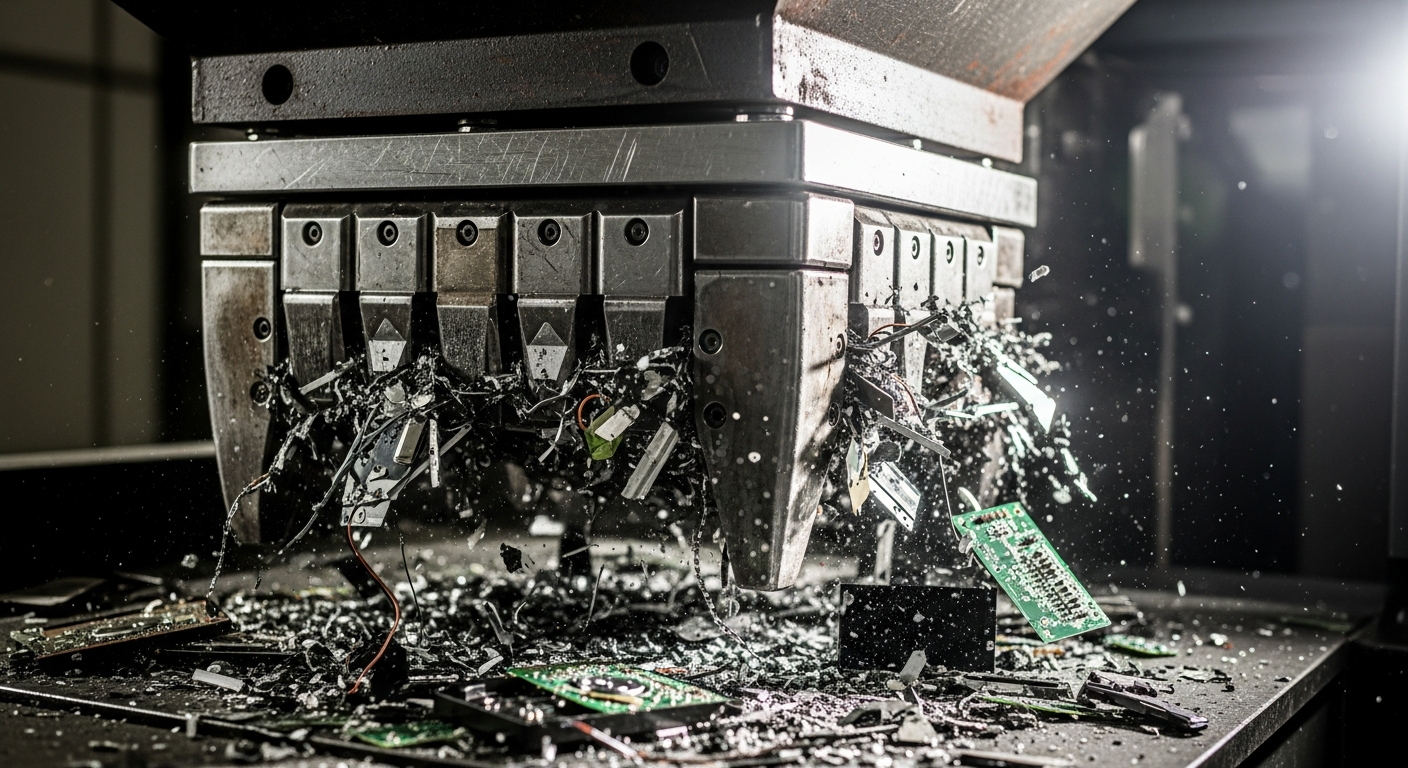
Documented Data Destruction Planning
Hard Drive Destruction Planning for St. Louis Organizations
We match your media types, internal controls, and documentation requirements to the right sanitization approach. Request a quote and we put the method and logistics for your St. Louis project in writing.
Learn About Data DestructionCompliance Frameworks Relevant to St. Louis Organizations
St. Louis organizations should begin with their own data classifications, records schedules, contracts, grant conditions, and information-security policies, then confirm any applicable legal requirements with qualified counsel. Missouri MDNR guidance identifies restrictions on landfilling certain hazardous electronics for businesses, schools, nonprofits, churches, and public agencies; data-handling duties are a separate question. Neither should be inferred from a generic city page.
Precision E-Cycle does not hold R2 facility certification. That certification sits with the downstream vendors who receive our recovered material, and their R2 status requires independent third-party auditing, verified downstream tracking, and continuous environmental health and safety review. The distinction matters because downstream tracking is where material has historically entered unregulated markets, and the R2 requirement at the downstream processor level is precisely the control designed to prevent that. Our ISO 27001:2022 certification, certificate number 59247188219687, applies to our information security management system. Our ISO 14001:2026 certification, certificate number 48669488322465, applies to our environmental management practices. Neither substitutes for R2 at the facility level, and we describe them accurately.
NIST Special Publication 800-88 Rev. 2 defines three sanitization tiers: Clear, Purge, and Destroy. For a St. Louis project, the organization matches its media types and internal policy to an acceptable method, and Precision E-Cycle confirms the method and evidence format in your written scope. Solid-state media may require a different approach from magnetic drives because wear-leveling can make a standard overwrite unreliable.
Talk through your requirements and we will scope pickup, documentation, and scheduling for your site.

St. Louis Context for IT Asset Retirement
St. Louis combines specialized research and production settings in a compact regional economy. The Cortex Innovation Community links bioscience and technology activity with academic medicine, while the 39 North corridor centers plant science and agricultural technology. Clayton, Chesterfield Valley, and the Spirit of St. Louis Corridor add financial, executive, corporate, distribution, and technology environments to the planning picture.
Healthcare and academic medicine are the dominant local context for ITAD planning. BJC HealthCare, SSM Health, Mercy Health, Washington University in St. Louis, Saint Louis University, and University of Missouri St. Louis represent varied clinical, research, teaching, and administrative environments. Each setting can involve different ownership records, data classifications, approvals, and equipment retirement documentation. These organizations are named as market context only, not as Precision E-Cycle clients or partners.
St. Louis also has aerospace, defense, geospatial, finance, agribusiness, and industrial technology context. Boeing Defense, Space & Security, the National Geospatial-Intelligence Agency West, Edward Jones, Emerson Electric Co., Bayer Crop Science, and Bunge Global SA all operate in the region. That range is why a project brief may need to separate controlled information, business records, research data, and ordinary equipment. They are named as market context only, not as clients or partners.
St. Louis and Surrounding Communities
Organizations across these communities can request pickup and a project quote. Share your requirements to get started.
St. Louis Electronics Recycling and ITAD: Common Questions
Need to Plan an Equipment Retirement Project in St. Louis?
Tell us about the equipment, timing, and documentation requirements for your St. Louis project. We scope pickup, documentation, and data destruction around your site, with processing at our secure Lincoln, Nebraska facility. Ask about free pickup.