
Electronics Recycling
Milwaukee, Wisconsin.
Plan With Confidence.
Milwaukee organizations can request a quote for electronics recycling, IT asset disposition, and documented data destruction. Tell us what you are retiring and we scope pickup and documentation, with processing at our secure Lincoln, Nebraska facility.
Electronics Recycling Planning for Milwaukee Organizations
Milwaukee, Wisconsin organizations can request electronics recycling and IT asset disposition today. Tell us what you are retiring and we scope pickup, documentation, and data destruction around your site, with processing at our secure Lincoln, Nebraska facility. Ask about free pickup.
Milwaukee organizations can start an electronics-recycling project by identifying device types, data sensitivity, internal records requirements, and project constraints. Share those details and Precision E-Cycle scopes pickup logistics and documentation around your site, with equipment processed at our secure Lincoln, Nebraska facility. Request a quote for pickup in Milwaukee today.
Milwaukee brings together academic medicine, financial services, industrial manufacturing, and research institutions with different IT retirement concerns. A clinical workstation may sit inside a final-disposition policy, a financial system may require control evidence, and a plant-floor computer may hold process or design data. We build each quote around those requirements.
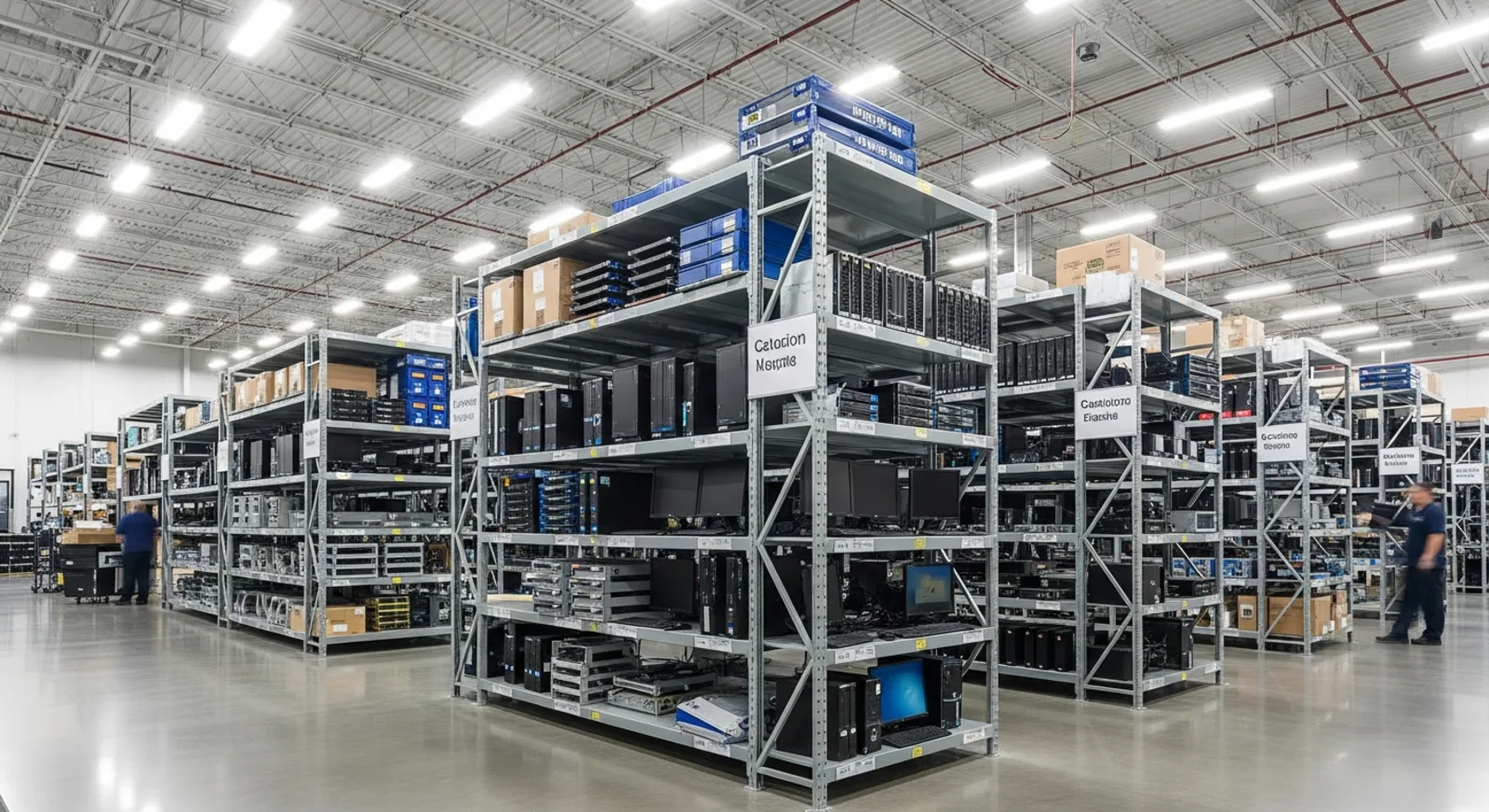
Equipment Categories Milwaukee Organizations Typically Need to Plan For
From a single hard drive to a full data center decommission. If it is accepted within the confirmed scope, we coordinate responsible processing with R2-certified downstream vendors.
Built for Milwaukee's Compliance-Sensitive Organizations
Organizations in Milwaukee can use these sector examples to define data, custody, sanitization, and documentation requirements, then request a project quote.
From First Call to Final Certificate
Share your requirements and we scope logistics, documentation, and data destruction methods around your project.
Contact and Scope
Reach us by phone or the contact form to describe equipment categories, data sensitivity, and documentation requirements. We scope pickup logistics and documentation around your Milwaukee site and send a quote.
Serial-Level Intake
Devices are logged by make, model, and serial number against a chain-of-custody manifest before they change hands, with the intake fields set out in your written scope.
NIST 800-88 Sanitization
Data-bearing media is sanitized using methods informed by NIST SP 800-88 Rev. 2, which defines Clear, Purge, and Destroy. The method is matched to media type and your policy and recorded for each device.
Certificate and Downstream
You receive the documentation set agreed in your scope, including asset manifest, destruction evidence, and downstream records where applicable, with applicable material routed to R2-certified downstream processors.
Academic Medicine and Clinical IT Retirement in Milwaukee
Academic medical organizations in Milwaukee operate clinical IT that is not limited to bedside workstations. Laboratory information systems, imaging peripherals, pharmacy platforms, and revenue-cycle computers may also process clinical or financial information. Before those devices leave controlled custody, the responsible privacy, security, and records teams should decide how retirement fits the organization's final-disposition policy and what evidence must be retained.
The planning gap is often in the asset register, not in the recycling method. A workstation may be tracked by location and cost center without recording whether it supported a clinical application, a research protocol, or an administrative process. Milwaukee healthcare teams should identify media that may contain electronic protected health information, name the people who can approve custody transfer, and decide whether batch-level or per-device evidence fits their audit process. A proposed record can include make, model, serial number, method, and date. The covered entity must approve whether that format is sufficient.
Clinical equipment can retire throughout the year as devices fail, software requirements change, or refresh programs advance. An inquiry can describe that timing, the internal approval path, and the records the compliance team needs to retrieve later. Precision E-Cycle can quote a recurring pickup and documentation arrangement around that timing.
Financial Services and Payments Technology in the Milwaukee Metro
Financial-services and payments companies in Milwaukee typically retire laptops, virtual-desktop endpoints, servers, and storage that may hold customer, employee, or transaction information. Those sector descriptions are market context, not client relationships.
The useful planning question is which internal control the retired system supported. A device connected to financial reporting, customer account servicing, or payment processing may need a different evidence trail than a general office computer. Security, legal, records, and audit owners should state whether they need serial-level intake, a named sanitization method, chain-of-custody transfers, and a reconcilable Certificate of Destruction. A quantity-only record may be harder to match to an asset register.
A multi-site financial organization should list every location, asset category, custody expectation, and record-separation need in its inquiry. Precision E-Cycle scopes pickup, logistics, and documentation for each location in writing.
Manufacturing, Engineering Systems, and Campus Research Equipment
Manufacturers in Milwaukee operate engineering workstations, quality systems, and plant-floor computers that can hold design files, process parameters, inspection records, or employee information even when the hardware looks like ordinary office equipment. A sound internal plan identifies those systems, their data stewards, and the evidence required after a disposition event.
Operational technology should not be collapsed into a single office-IT inventory. A controls computer, a calibration station, and a conference-room laptop can present different data categories and different approval paths. Organizations should match media type to an acceptable method informed by NIST SP 800-88 Rev. 2 in their own policy, and Precision E-Cycle confirms the method in the written scope. Solid-state storage may need a different approach from magnetic drives because wear-leveling can make a standard overwrite unreliable.
Universities and research organizations add teaching and research equipment to the same Milwaukee planning context. Grant conditions, institutional property rules, education records, and research-data plans can all affect when a device may leave campus and what record must be kept. Academic calendars help sequence internal approvals and set natural pickup windows. Multi-site manufacturers and campuses can request a quote, and we set out collection, sanitization, and documentation in a written scope.
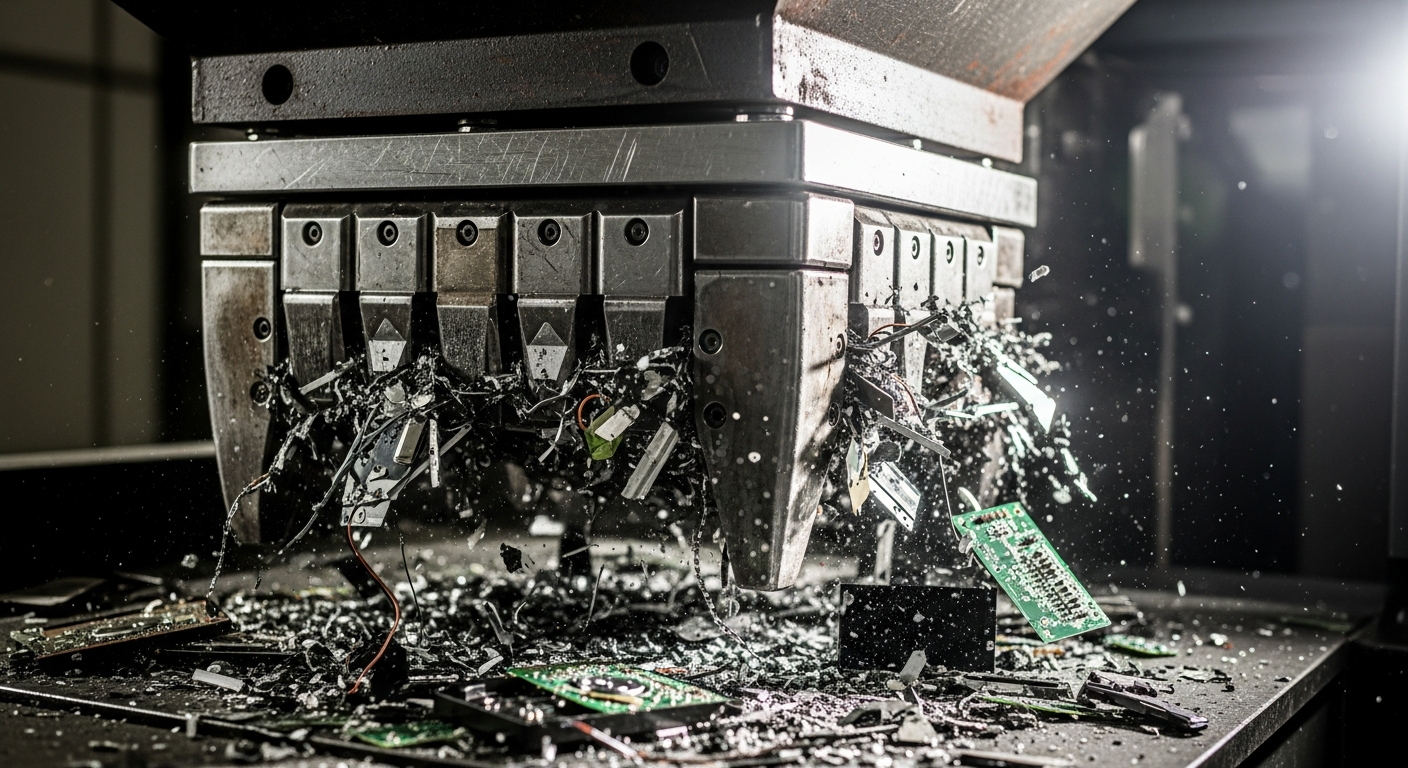
Documented Data Destruction Planning
Hard Drive Destruction for Milwaukee Organizations
A sound ITAD plan aligns media types, internal controls, and documentation requirements with the right sanitization approach. Request a quote and we put the method, logistics, and any witnessing requirement in a written scope.
Learn About Data DestructionCompliance Frameworks for Milwaukee Organizations
Milwaukee organizations may operate under several privacy, records, contract, grant, and information-security frameworks at once. Healthcare teams should review final-disposition policies. Financial institutions should consult their information-security programs. Manufacturers should classify operational technology and engineering systems. Universities should reconcile research, education-record, and grant requirements. Each organization must decide whether device-level or batch-level evidence is appropriate for its own controls.
Precision E-Cycle's ISO certifications document how we manage our own operations. ISO 27001:2022, certificate number 59247188219687, covers our information security management system. ISO 14001:2026, certificate number 48669488322465, covers environmental management. ISO 9001:2015, certificate number 11323005267121, covers quality management. ISO 45001:2018, certificate number 56838075233879, covers occupational health and safety. Processing by R2-certified downstream vendors applies to the recovered material they receive, not to Precision E-Cycle as a collection and initial processing operation.
NIST Special Publication 800-88 Rev. 2 defines Clear, Purge, and Destroy as sanitization categories and provides planning language organizations can use when specifying a project. Milwaukee teams should account for media type, data sensitivity, and internal policy, including the limitations of standard overwrite methods on solid-state storage. Precision E-Cycle confirms the method, validation process, and evidence format for your Milwaukee project in writing.
Talk through your requirements and we will scope pickup, documentation, and scheduling for your site.

Milwaukee Context for IT Asset Retirement
Milwaukee is Wisconsin's largest city and sits on the western shore of Lake Michigan. The metro combines a long manufacturing and port heritage with large healthcare, insurance, and higher-education employers. Local organizations can use that mix to identify which equipment belongs to clinical, financial, research, or operational-technology programs before it is retired.
Universities and research organizations in Milwaukee illustrate why a research equipment plan should consider grant conditions, asset-accounting records, data-management obligations, and internal approvals. Campus refresh cycles are useful for internal coordination and make a natural window to request a quote.
Ready to retire equipment in Milwaukee? Identify the equipment categories, approximate asset list, any required sanitization method, internal approval path, and the documentation your audit, procurement, or records team expects. Share it with us and we return a scoped quote covering pickup, timing, custody terms, and documentation.
Milwaukee Area
Organizations across these communities can request pickup and a project quote. Share your requirements to get started.
Milwaukee Electronics Recycling and ITAD: Common Questions
Need to Plan an Equipment Retirement Project in Milwaukee?
Tell us about the equipment, timing, and documentation requirements for your Milwaukee project. We scope pickup, documentation, and data destruction around your site, with processing at our secure Lincoln, Nebraska facility. Ask about free pickup.