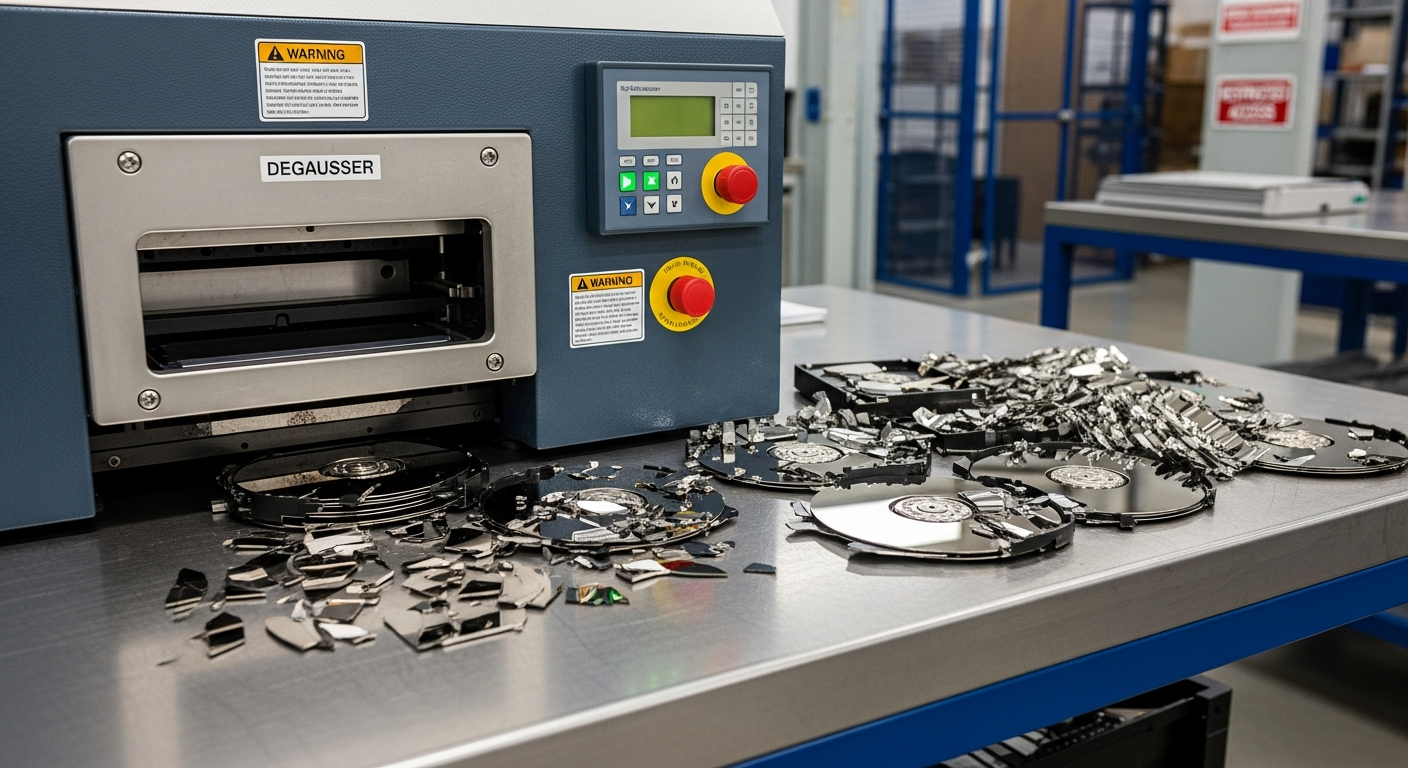
How should organizations handle secure IT asset disposition? Precision E-Cycle coordinates IT asset disposition with R2-certified downstream vendors where applicable. Where included in the confirmed service scope, eligible data-bearing equipment may be sanitized or physically destroyed using methods informed by NIST 800-88. This guide covers the practices that protect your business and the documentation that may apply to accepted equipment.
Most organizations sign the pickup manifest and never see what happens next. The downstream journey of retired electronics is where certified ITAD separates from casual recycling, and where the documentation that protects you in an audit is actually produced. Understanding that journey helps procurement teams, compliance officers, and sustainability leads ask better questions and verify better answers.
From Your Dock to Our Facility
The chain of custody begins before the truck leaves your facility. A serialized pickup manifest lists every device by asset tag or serial number, condition, and data-bearing status. The driver and your representative both sign, creating the first documentation link in the audit trail. Sealed transport with tamper-evident seals protects the load between your dock and our secure Lincoln, Nebraska facility.
For organizations operating under HIPAA, PCI DSS, or FISMA, this first link is non-negotiable. An auditor who asks "When did the devices leave your control?" expects a signed manifest with a timestamp, not a verbal confirmation. Precision E-Cycle provides serialized manifests for business pickups, and we align record retention with your audit requirements during scoping.
Intake, Sorting, and Asset Tagging
At the processing facility, each device is scanned again against the manifest. Discrepancies are flagged immediately and communicated to the client before any processing begins. Devices are sorted into four categories: data-bearing equipment requiring sanitization or destruction, reusable equipment bound for remarketing, non-data equipment for material recovery, and hazardous material requiring special handling.
Sorting accuracy directly affects both security and value recovery. A laptop with a functional drive mistakenly routed to material recovery without sanitization creates a data breach risk. A server with a failed drive but intact chassis and processors mistakenly routed to shredding destroys remarketable value. Trained technicians with barcode scanners and standardized checklists prevent these errors.
Data Destruction: The Non-Negotiable Step
In a certified process, data storage is addressed before a device moves forward in any path. For devices bound for remarketing, this means NIST 800-88 aligned sanitization with verification. For devices bound for material recovery, this means physical destruction by shredding or disintegration. For devices with embedded storage such as smartphones, tablets, or IoT sensors, this means chip-level destruction or verified cryptographic erase.
The data destruction area is physically segregated from the sorting and remarketing areas. Access is restricted to technicians with specific authorization. High-security clients can ask about witnessed destruction and photo documentation during scoping. The output of this step is a Certificate of Destruction or Certificate of Data Sanitization with serial-level detail, issued per device or per batch depending on client preference and regulatory requirements.
Refurbishment and Remarketing Path
Devices that pass functional testing and cosmetic grading after data sanitization enter the remarketing pipeline. This includes enterprise laptops less than four years old, servers with current-generation processors, monitors in excellent condition, and networking equipment from major manufacturers. Each device is cleaned, tested, and repackaged for resale through wholesale channels.
Remarketing recovers residual value that offsets disposal costs. A single enterprise laptop in good condition can still carry resale value depending on specifications and market demand, and a rack server with dual processors and ample memory often more. Recoveries can be tracked and reported to the client, and value-sharing terms can be discussed during scoping.
Material Recovery and Downstream Processing
Devices that cannot be remarketed are routed to material recovery. This process begins with manual disassembly to separate hazardous components such as batteries and capacitors from recyclable material. Circuit boards are sent to specialized smelters that recover precious metals. Steel, aluminum, and copper are sorted by type and sent to commodity metal processors. Plastic housings are ground and sorted by resin type for reuse in manufacturing.
Downstream accountability is the critical differentiator between documented recycling and informal disposal. R2v3 downstream certification addresses tracking material to verified downstream partners with appropriate environmental and safety credentials. Precision E-Cycle may maintain and provide applicable downstream accountability records to clients who request them.
Landfill Diversion Accountability
A landfill diversion goal means received material is routed toward reuse, material recovery, or energy recovery where feasible, with applicable material sent to R2-certified downstream processors. Disposition depends on the material stream and confirmed downstream scope. Applicable commitments can be evaluated through downstream tracking records and the relevant third-party R2v3 downstream certification documentation.
Diverting material from landfill requires vigilance at every step. A single lithium-ion battery placed in general waste creates an environmental and safety violation. A CRT monitor sent to a non-specialized processor creates lead exposure risk. Certified facilities have the training, equipment, and partner network to prevent these errors.
What You Should Receive at Closeout
A complete closeout package includes the original pickup manifest, chain-of-custody transfer logs, Certificates of Destruction or Data Sanitization for every data-bearing device, a remarketing value report if applicable, and a downstream accountability summary. These documents form the compliance record that you present to auditors, insurers, and regulators.
How Long the Downstream Process Takes
Clients often assume processing happens within days of pickup. The realistic timeline is longer, and knowing it in advance prevents friction with your own compliance deadlines. Intake and manifest reconciliation come first after arrival. Data destruction for standard batches follows, and expedited options can be discussed when a regulator or contract imposes a hard deadline. Remarketing takes the longest because devices must be tested, graded, cleaned, and matched to buyer demand, which can stretch over several weeks depending on the equipment category and market conditions.
Certificates of Destruction are issued once destruction is verified, not when the truck leaves your dock. If your audit calendar requires documentation by a specific date, tell your ITAD partner at scheduling time so the batch can be prioritized. Material recovery streams run on their own cadence: commodity metals move to downstream processors in consolidated shipments, so the final downstream accountability report may follow the destruction certificate by several weeks. None of this delay weakens your security posture, because data destruction is scheduled ahead of any downstream shipment.
Questions to Ask Before Your First Pickup
The downstream journey described above is what a certified process looks like, but you should verify rather than assume. Before the first manifest is signed, ask your vendor five questions. Who performs each processing step, in-house staff or subcontractors? Where does destruction physically happen, and can you witness it? What downstream partners receive each material stream, and what certifications do they hold? How quickly are certificates issued after destruction? What happens if a device on the manifest cannot be located at intake?
The answers separate certified processors from brokers. A broker consolidates loads and resells them, which adds custody transfers you cannot see and documentation gaps an auditor will find. A certified processor answers each question with specifics: named downstream partners, published certification IDs, defined certificate timelines, and a written exception procedure for manifest discrepancies. If a vendor hesitates on any of these, keep looking before your equipment leaves the building.
Precision E-Cycle provides downstream documentation for business pickups, from serialized chain-of-custody logs to Certificates of Destruction and downstream accountability records on request. Schedule a pickup and request a sample closeout package to evaluate our documentation against your audit requirements.