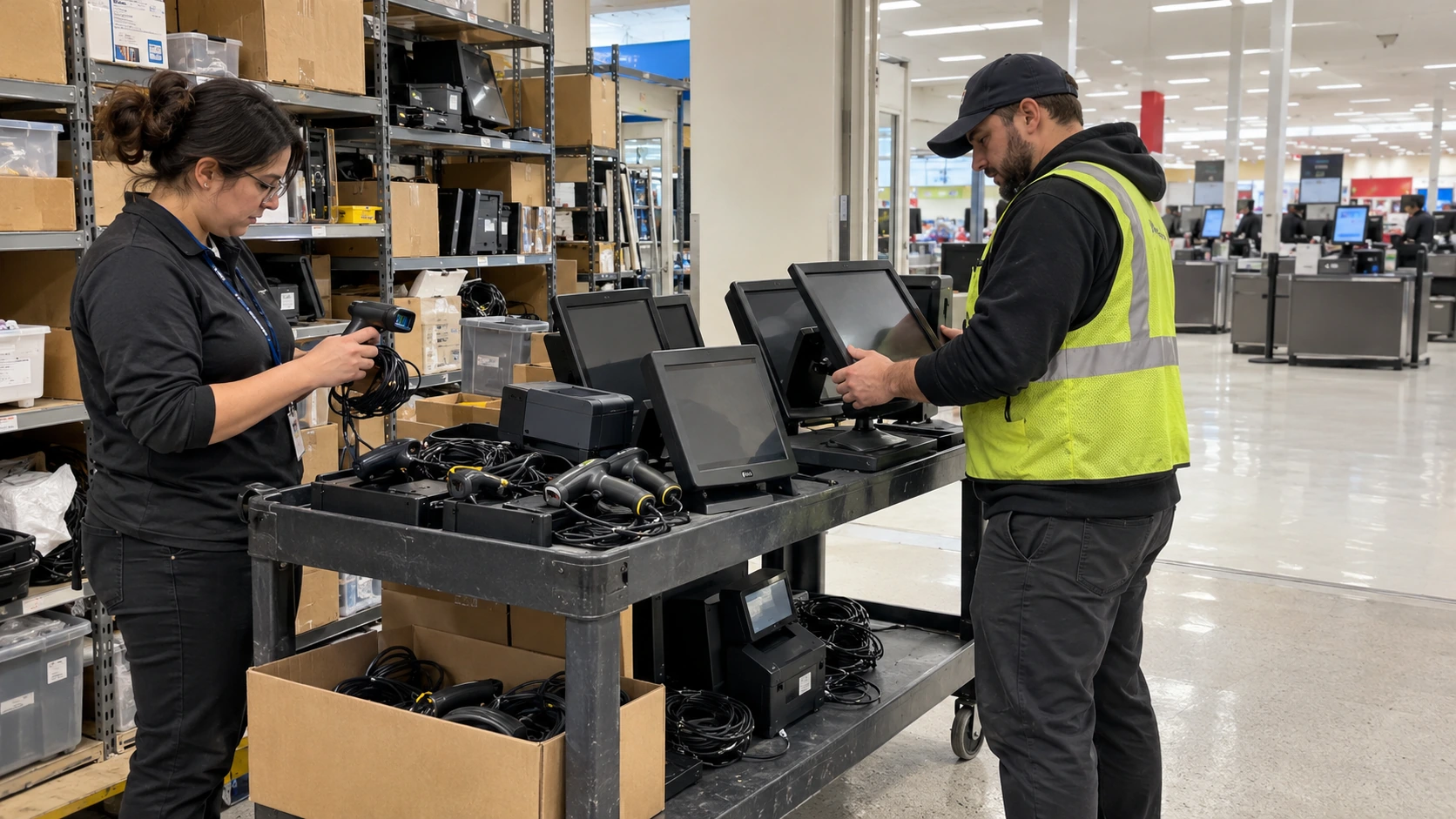
Retail POS Equipment
Recycling Sioux Falls
Refresh Each Store
Make room for the next store system without losing track of the old one. Precision E-Cycle coordinates secure electronics recycling for Sioux Falls point of sale terminals, handheld scanners and store refresh equipment. Free pickup available, with data and battery handling planned before collection.
Speak with our Sioux Falls team
How does point of sale recycling in Sioux Falls work?
Retail POS equipment recycling in Sioux Falls starts with a store list, the devices being replaced and the approved handoff window. Precision E-Cycle coordinates Sioux Falls retail POS equipment recycling so terminals, scanners and related electronics move through a clear collection plan, with data and battery needs identified before the load leaves.
Store refresh recycling in Sioux Falls SD works best when the outgoing devices stay separate from replacement stock. Label equipment by store and keep the retirement authorization with the list. We can review pickup around your rollout, helping store managers release the approved lot while the rest of the location continues operating.
Precision E-Cycle plans retail POS equipment recycling in Sioux Falls around the equipment used on your sales floor and in your stockroom. Tell us about terminals, handhelds, printers and backup power units together. We review the collection and processing scope at our Lincoln facility, then agree the records your rollout owner needs.
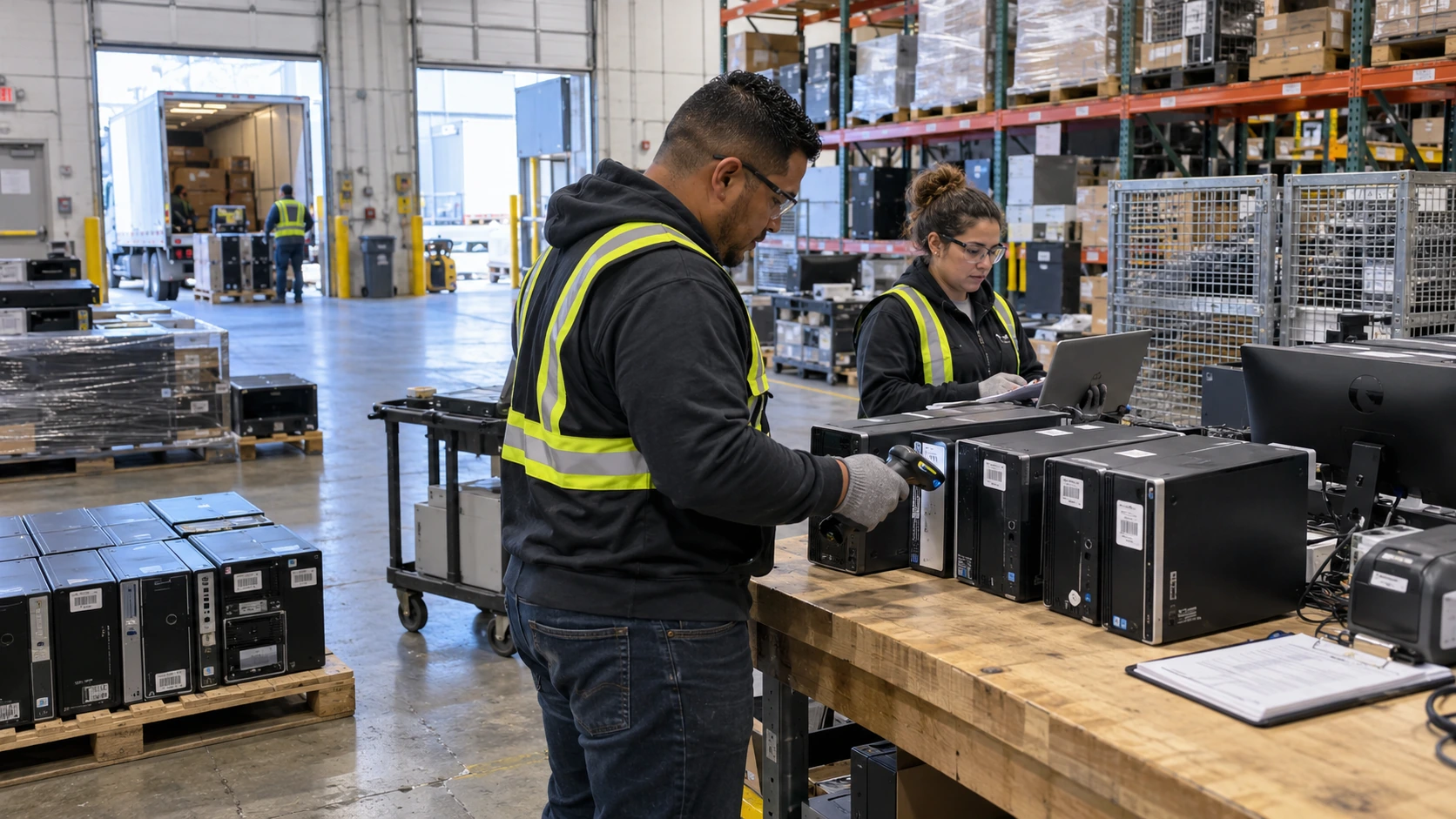
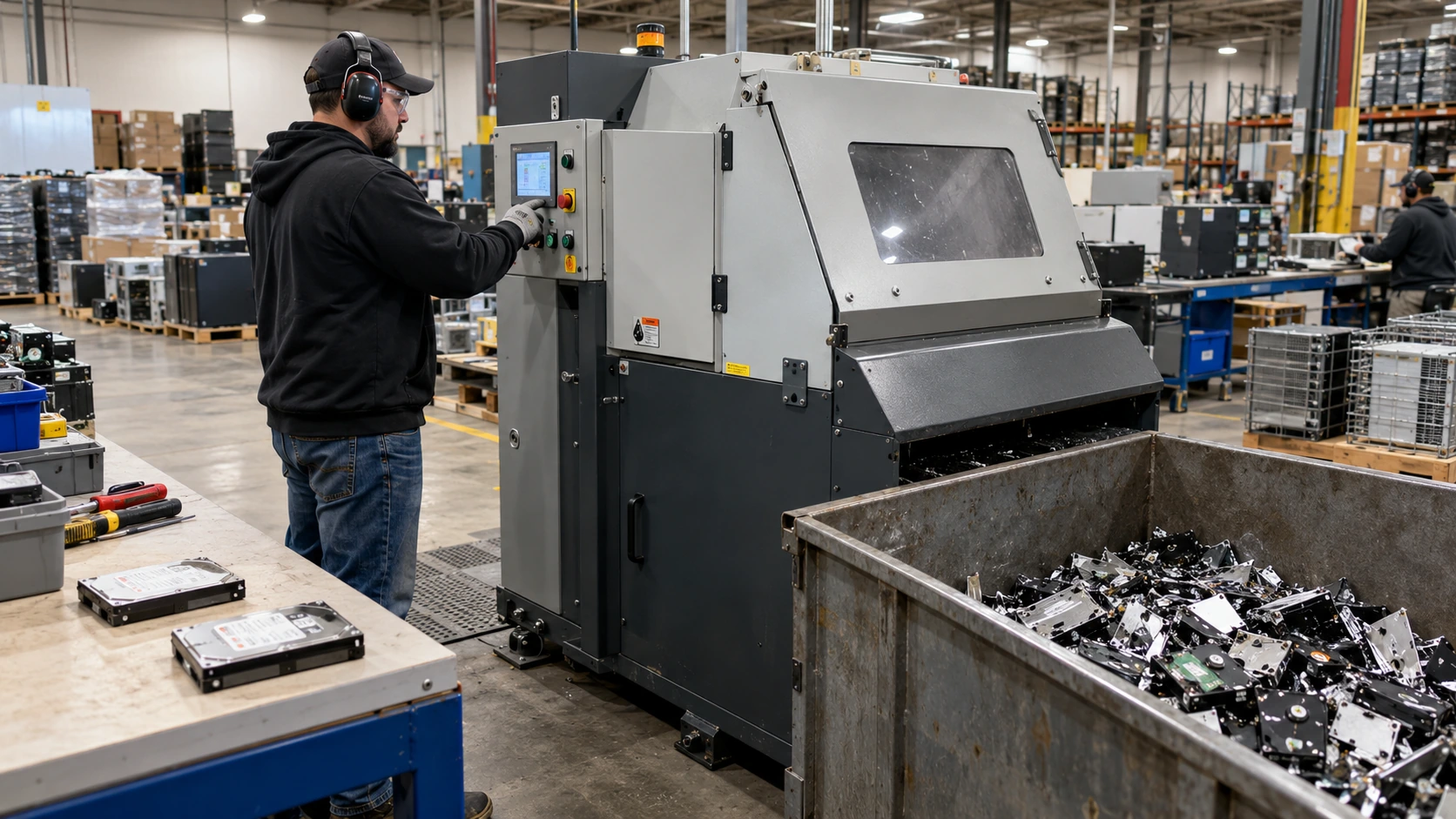
How does store refresh recycling in Sioux Falls SD stay organized?
Keep a store refresh organized by separating the approved outgoing equipment from replacement stock and active devices. Use the store identifier on the collection list and prepared groups. This gives managers a clear handoff and helps the central rollout owner see which location released which equipment after the new system went live.
A POS terminal is only part of the retirement lot. Scanners, receipt printers, network equipment and backup power units can follow different handling paths. List those groups separately, including known storage and batteries, so the collection review addresses the whole outgoing system without assuming that every item behaves like a desktop computer.
- Identify each store and the local release contact.
- Separate approved retirements from replacement stock.
- Flag terminals with stored information or unknown media.
- List battery powered handhelds and backup power units.
- Record equipment held back after the rollout.
For a project spread over several locations, keep the same origin field from the first list through the final reconciliation. A central owner can then review the combined record while store contacts check their own handoffs. Send the rollout schedule early so our team can discuss the collection sequence with you.
What should stores identify about batteries and device data?
Stores should identify the battery type and data concern before equipment is packed for retirement. Handheld scanner batteries and lead acid backup power batteries are different streams. Tell us what you have, including damaged units, so the handling plan can be agreed before the devices enter the general pickup lot.
South Dakota's lead acid battery exchange provision appears in SDCL 34A-6-91. Precision provides equipment handling support for organizations that must meet applicable battery rules. Keep the battery question with the project review, and ask your responsible staff to confirm any store obligations separately from the electronics collection plan. Source: South Dakota Legislature, Legislative Research Council
- Keep loose batteries identifiable by type.
- Flag damaged or swollen units before collection.
- Identify storage media in terminals and support equipment.
- Approve the data handling before devices leave the store.
A reset screen is not a project record. Tell us what data action your organization expects and how you need it documented, particularly where several terminal models are being replaced. Our team can scope sanitization using NIST SP 800-88 Rev. 2 methods and retain exceptions for an approved next step.
Keep the Rollout Record Connected to Each Store
Before the Refresh
The starting store list sets the scope for the collection. Identify terminals, handhelds and related equipment by origin, and confirm who can release them after the replacement systems are working. Bring data and battery questions into the same review so staff have a clear preparation plan.
At the Handoff
Keep the approved outgoing equipment together and separate from active stock. The store contact can confirm changes against the list before release, including devices held back after the rollout. A clear record of the actual handoff helps the central project owner follow up without guessing what left each location.
After the Collection
Reconcile the completed project records with the starting store list. Review any exceptions with the responsible location, then retain the agreed data documentation and disposition record together. That gives the rollout owner a practical closeout trail and a way to resolve later questions about equipment from a particular store.
How does a store rollout reach closeout?
Use the rollout schedule to plan collection, then keep the store origin attached to the equipment through reporting and reconciliation.
List the store rollout
Send the participating stores, equipment mix and replacement schedule. Identify who can release retired devices at each location so collection follows the approved rollout rather than a general storage room clearout.
Separate data and batteries
Flag terminals that may hold data, handhelds with batteries and any backup power equipment. Keep damaged items identified for the handling review and avoid mixing loose batteries into a general electronics box.
Coordinate each store handoff
Group the approved outgoing devices by origin and confirm the access window with the store contact. Keep replacement stock separate and record changes to the lot before the collection is completed.
Reconcile the rollout record
Compare the project record with the store list, then follow up on devices held back or added. Retain data handling documentation and the free certificate of destruction for media destroyed within the agreed scope.
How do stores document the completed retirement?
Store equipment retirement needs a clear approval for both data and material handling. Tell us about the storage in terminals and support devices, along with battery types and condition. Precision E-Cycle reviews that scope before collection so store staff can prepare the right groups and the rollout owner can approve their next step.
The completed records should identify what happened to the equipment and data, rather than just count boxes from a store. Agree the origin and device fields needed for your rollout report. A free certificate of destruction is available for media destroyed within the project, while other equipment follows its approved recycling or reuse path.
Precision E-Cycle holds ISO certifications for information security, environmental management, quality management and occupational health and safety. Processing takes place at our Lincoln facility. Store managers can bring questions to the project review, while the central owner sets the reporting and retention needs for the rollout across participating locations and equipment groups.
Choose the related equipment service
Store systems contain more than terminals. Review the equipment and service pages that match the rest of your outgoing lot before approving the collection.
What do Sioux Falls store teams ask?
Do South Dakota stores need a lead acid battery plan?
Are there charges for any store refresh equipment?
Is free pickup available for Sioux Falls retail electronics?
How quickly can you collect Sioux Falls store equipment?
Can point of sale terminals and scanners travel together?
What records help reconcile a collection across several stores?
Plan your Sioux Falls store equipment collection
Send the store list and your refresh schedule for a free quote. Free pickup available, with a free certificate of destruction for destroyed media. Give each store a clear equipment handoff and your rollout owner a usable record.